French Revolution
- Also known as
- Ar-a-mach na Frainge
- Bun-chaghlaa yn Rank
- Buyuk fransuz inqilobi
- Böyük Fransa inqilabı
- Büyük Frenk İnqilâbı
- Cách mạng Pháp
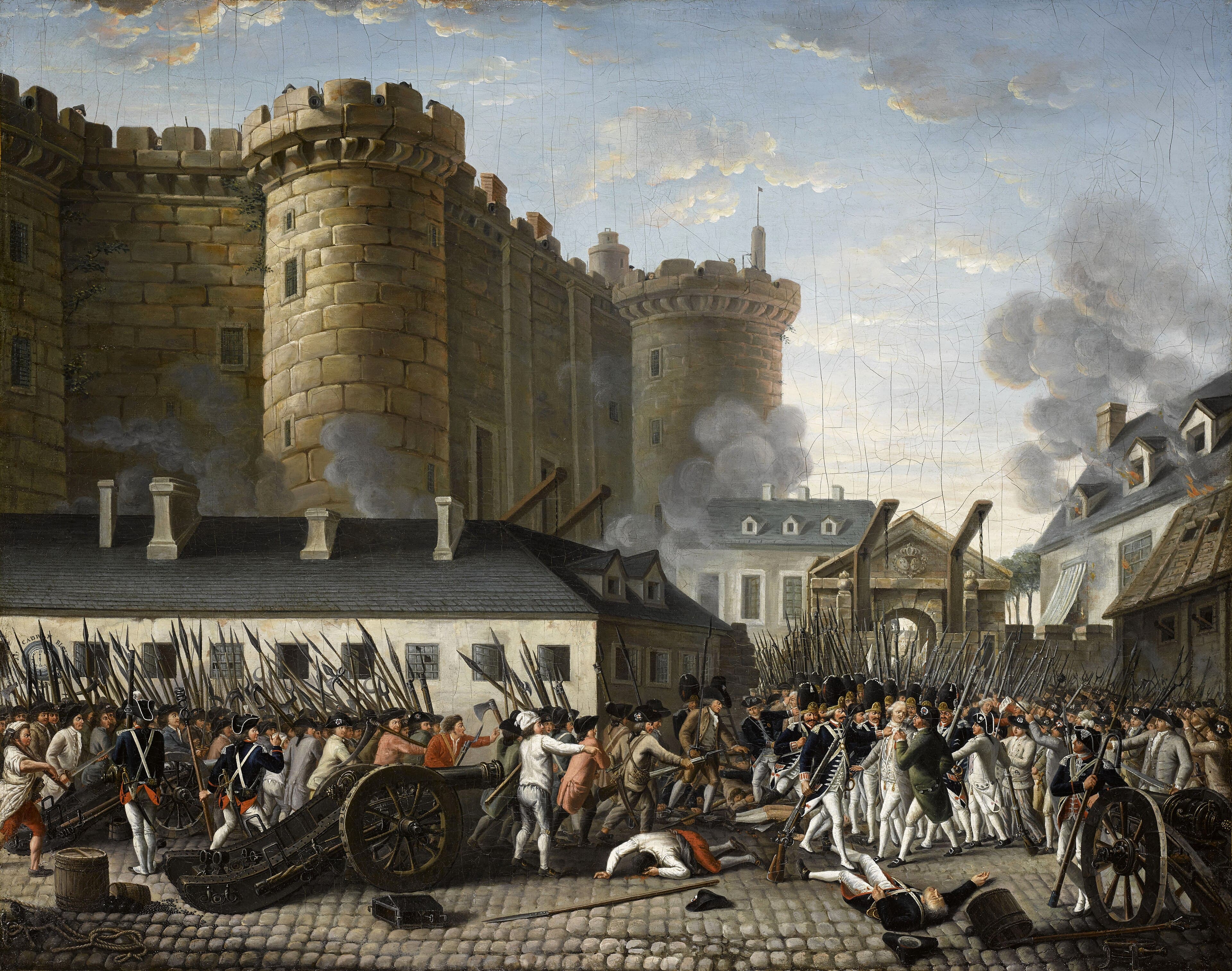
By the late 1780s, France was a society buckling under its own weight, its population having swelled to 28 million while its antiquated state machinery remained paralyzed by a compounding economic crisis, bad harvests, and widespread social distress.
In the late summer of 1788, the French monarchy was bankrupt, not from a lack of national wealth, but from a terminal paralysis of its institutions. Half of the state’s annual revenue was consumed merely by servicing a mountain of debt, much of it accumulated while funding the American Revolutionary War. Yet the wealthiest segments of society—the nobility and the Catholic Church, which together held over a third of the kingdom’s land—remained largely exempt from the taxes that burdened the rest of the nation. When successive finance ministers attempted to introduce a universal land tax and dismantle internal tariffs, their reforms were systematically blocked by the regional parlements, the aristocratic judicial bodies that claimed to defend the ancient rights of the nation against royal tyranny. Caught in an impasse, the government of Louis XVI buckled. On August 8, 1788, the minister Brienne announced that the King would summon the Estates-General, a representative assembly of the three realms of the kingdom that had not met since 1614. It was an admission of insolvency, a crack in the facade of absolute monarchy that transformed a localized fiscal crisis into a national political reckoning.
As the winter of 1788 descended, one of the coldest and most severe in memory, the political atmosphere grew as volatile as the weather. A disastrous harvest in 1788 had already sent food prices soaring and plunged peasant farmers and urban wage laborers into deep distress. Amid this misery, a deluge of political pamphlets began to flood the country, averaging twenty-five new titles a week after censorship was relaxed. None was more potent than What Is the Third Estate? by the Abbé Sieyès, which declared that the commoners of France—the lawyers, merchants, artisans, and peasants who made up ninety-five percent of the population—constituted the entire nation, while the privileged orders were mere parasites. When the Parlement of Paris ruled that the Estates-General must convene in its ancient 1614 format, where each of the three orders met separately and cast a single collective vote, the middle class erupted in fury. Under this system, the First Estate (the clergy) and the Second Estate (the nobility) could always unite to outvote the Third Estate, regardless of the population they represented. Though Louis XVI agreed to double the number of Third Estate deputies to 610, he left the crucial question of how those votes would actually be counted—by order or by head—undecided.
On May 5, 1789, the Estates-General opened at Versailles in the Salle des Menus Plaisirs. The disparity was immediate: the Third Estate, dominated by lawyers and administrative office-holders, arrived with —lists of grievances demanding tax equality and the abolition of feudal dues. Yet they found themselves stalled on the very first day over the verification of credentials. The nobility and the upper clergy immediately began verifying their members in separate chambers, while the Third Estate refused to cooperate, insisting that all credentials must be verified in common as a single house. For weeks, the commoners sat in the main hall, refusing to conduct business, maintaining the fiction that they were merely an unorganized crowd of individuals. The deadlock broke on June 10, when Sieyès moved that the Third Estate send a final invitation to the other orders to join them. Hearing no response, they began verifying their own deputies. On June 17, on a motion by an obscure deputy named Legrand, the assembly took a step of breathtaking audacity: they declared themselves the "National Assembly" of France, assuming full sovereign power over the state’s finances and declaring all existing taxes illegal unless approved by them.
Connected to
7 links to entries not yet ingested in the Library.