Event · 1453 CE – 1453 CE · Late Antique and Byzantine
Fall of Constantinople
- Also known as
- A queda de Constantinopla
- asedio de Constantinopla
- Asediul Constantinopolului
- assedio di Costantinopoli
- Asèdio de Costantinòpułi
- Battaglia di Costantinopoli
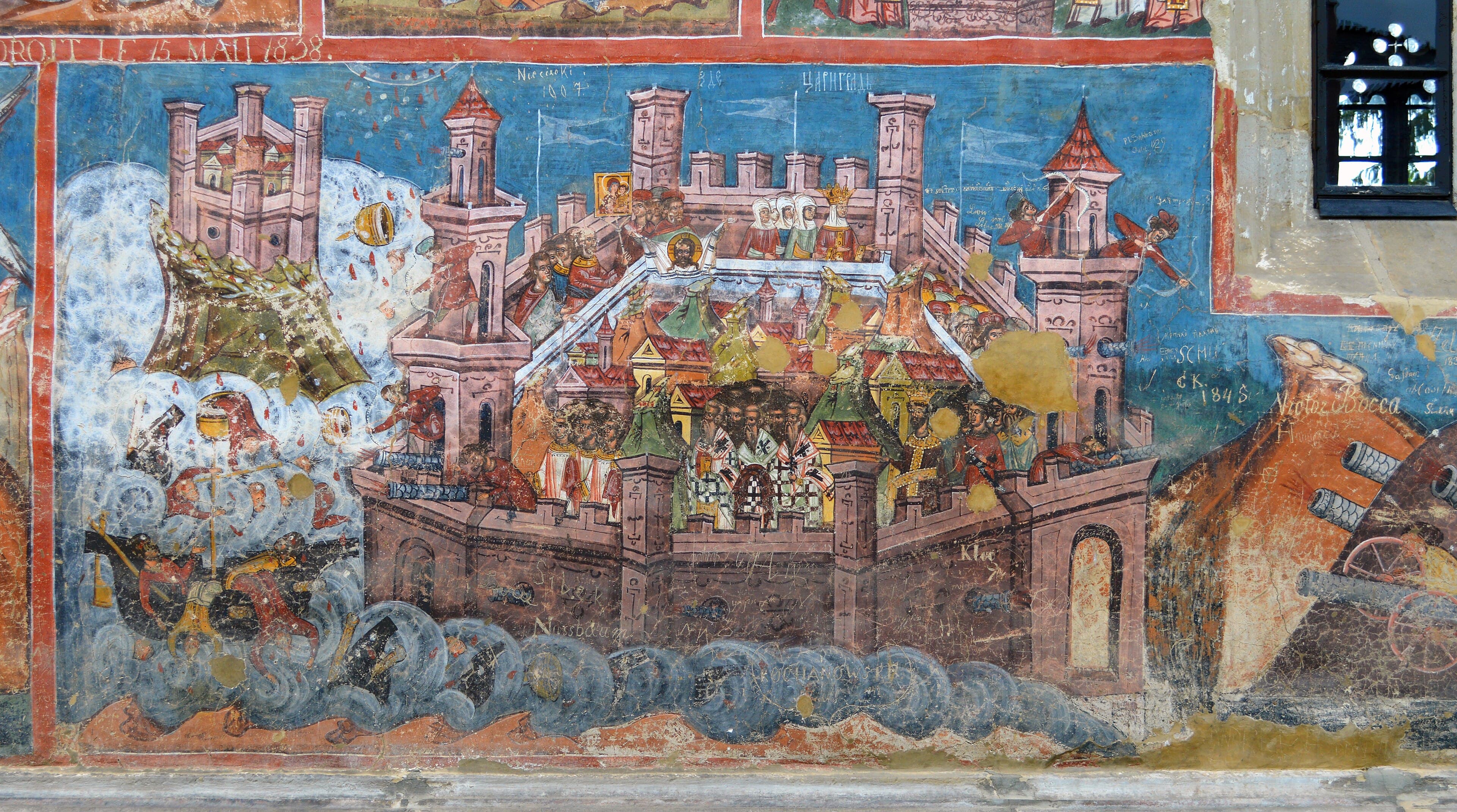
For eleven centuries, the massive stone ramparts of Constantinople stood as the ultimate symbol of imperial permanence, shielding the heirs of Rome from generations of invaders.
By the middle of the fifteenth century, the city that had once been the pivot of the Mediterranean world had dissolved into an elegy. Constantinople, consecrated in 330 CE by Constantine the Great as the glittering capital of the Roman Empire, was no longer a sprawling metropolis of imperial triumph. It had survived eleven centuries and dozens of sieges, falling only once—to the opportunistic soldiers of the Fourth Crusade in 1204. Though the Byzantines of Nicaea recaptured their capital in 1261 under the Palaiologos dynasty, the restoration was a hollow one. What followed was a slow, agonizing constriction. Fended off by Latins, Serbs, Bulgarians, and the rising power of the Ottoman Turks, the empire bled territory and wealth. Then came the Black Death between 1346 and 1349, which extinguished nearly half the city’s population. By 1453, Constantinople was not so much a city as a melancholic archipelago of walled villages, separated by vast fields, orchards, and abandoned ruins, all encircled by the great fifth-century Theodosian walls. Fewer than 50,000 people lived within this twelve-mile perimeter, including refugees fleeing the advance of the Ottoman state. The empire had shrunk to a few square kilometers outside the city walls, the Princes' Islands in the Sea of Marmara, and the Peloponnese in southern Greece.
To the West, the courts of Europe looked upon the new nineteen-year-old Ottoman Sultan, Mehmed II, who ascended the throne in 1451, with comfortable condescension. European diplomats celebrated his accession, assuming his youth and apparent inexperience would lead the Ottomans into ruinous missteps. Mehmed encouraged this illusion with mild words and friendly overtures to foreign envoys. But his actions soon revealed a terrifying clarity of purpose. In early 1452, Mehmed began constructing a massive fortress, Rumeli Hisarı, on the European side of the Bosphorus. Situated directly across from Anadolu Hisarı, a fortress built by his great-grandfather Bayezid I, this new stronghold was strategically named Boğazkesen—a Turkish double entendre meaning both "strait-blocker" and "throat-cutter." It gave the Ottomans absolute control over the sea traffic of the Bosphorus, isolating Constantinople from the Genoese grain and trade colonies on the Black Sea. To ensure no distraction, Mehmed dispatched a large garrison to the Peloponnese to prevent the Emperor’s brothers, Thomas and Demetrios, from sending aid. Meanwhile, Ottoman engineers, carpenters, and artisans worked frantically to pave the roads and reinforce the bridges leading from the Ottoman capital of Adrianople, preparing the ground for an unprecedented logistical feat.
Inside Constantinople, Emperor Constantine XI Palaiologos watched the trap close and sent desperate pleas to Western Europe. But the aid he sought was choked by centuries of religious rancor. Since the Great Schism of 1054, the Papacy in Rome had conditioned military aid on the submission of the Eastern Orthodox Church to papal authority. Though Byzantine emperors had repeatedly agreed to union—most recently at the Council of Florence in 1439—the common people, the clergy, and anti-unionist partisans in Constantinople bitterly resisted. The memory of the 1182 Massacre of the Latins by the Greeks and the brutal 1204 sack of the city by Western Crusaders ran too deep. In December 1452, with the threat at his gates, Constantine formally proclaimed the union in a half-hearted imperial ceremony, but it was too late to stir a grand Western crusade. Pope Nicholas V lacked the necessary influence over the monarchs of a fragmented Europe. France and England were exhausted by the Hundred Years' War; Spain was consumed by the Reconquista; the Holy Roman Empire was fractured by internal conflict; and Hungary and Poland were still reeling from their crushing defeat at the Battle of Varna in 1444.
Connected to
- in country · participated inByzantine Empire395 CE
- located inConstantinople330 CE
- participated inOttoman Empire1299 CE
+ 5 further connections to entries not yet ingested