Event · 1894 CE – 1895 CE · Korean Kingdoms
Donghak Peasant Revolution
- Also known as
- Donghak
- Donghak
- Donghak Köylü Devrimi
- Donghak Peasant Movement
- Donghak Rebellion
- Donghak-Aufstand
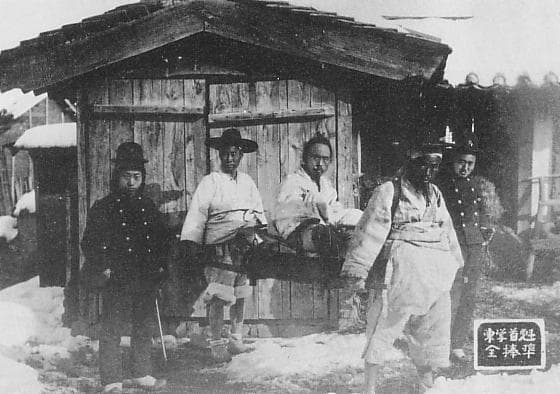
The spark that set Korea ablaze in the final decade of the nineteenth century began not with a foreign invasion, but with a local tyrant.
In the spring of 1894, the peasants of southern Korea did something remarkable with a sheet of paper: they signed their names in a circle. This was the Sabal Tongmun, a circular petition designed so that no single name sat at the head of the list, rendering the ringleader invisible to the retribution of the state. For decades, the Joseon Dynasty had been fraying under the weight of systemic corruption, insupportable taxation, and the unsettling encroachment of foreign powers. In the county of Gobu-gun, the local magistrate, Jo Byeong-gap, had pushed his subjects to the precipice of ruin. He had forced them to construct an unnecessary reservoir, only to tax them for its water; he had seized cleared wasteland under false promises of tax exemption; and he had extorted vast fortunes from the wealthy under fabricated charges of "infidelity" and "needless talents." When a thousand furious farmers finally descended on the local government offices on January 10, shattering the gates and forcing Jo to flee for his life, they were not merely rioting over rice or reservoirs. They were acting under the influence of a radical, home-grown faith that promised to turn their world upside down.
At the heart of this uprising was Donghak, or "Eastern Learning." Founded in 1860 by Choe Je-u, a visionary who claimed to have received a mystical talisman from the supreme deity, Hanulnim, Donghak was a theological tapestry woven from threads of Neo-Confucianism, shamanic animism, and, ironically, the very Western Christianity it sought to repel. Choe’s teachings were egalitarian and deeply destabilizing to the highly stratified Joseon social order. He declared that "All humans are Hanulnim"—that the divine resided within every individual, regardless of their caste, gender, or wealth. He spoke of a cosmic cycle of five thousand years that was drawing to a close, preparing to give birth to a new world. Though the state had executed Choe in 1864 for "tricking and lying to the foolish people," his faith did not die. Organized into local networks called Jeob and Po, the religion went underground, spreading quietly through the southern provinces of Chungcheong and Jeolla. By the late nineteenth century, as the country groaned under the influence of foreign merchants and the heavy hand of royal tax collectors, Donghak transformed from a marginalized spiritual sect into a formidable political vehicle.
By late 1892, the movement’s leaders had initiated the Gyojo Shinwon campaign, a series of mass petitions demanding the posthumous exoneration of their martyred founder. But under the leadership of Jeon Bong-jun, the Jeobju of Gobu, the petitions grew increasingly revolutionary. In the spring of 1893, tens of thousands of believers converged on the market of Boeun, wearing blue clothes with red gloves and constructing an earthen fortress. Their demands had transcended religious toleration; they called for the expulsion of Western missionaries and Japanese merchants, the cessation of illegal taxation, and the ban of the inflation-causing Dangojeon coin. Though the conservative Northern faction of the Donghak leadership, fearing a bloody government crackdown, managed to quell the Boeun assembly after three days, the revolutionary spark had been struck. When the abuse of Magistrate Jo in Gobu drove the local population to revolt in early 1894, Jeon Bong-jun did not see a localized riot; he saw the beginning of a holy war.
Connected to
7 links to entries not yet ingested in the Library.