Organization · Pre Columbian North American
Crow Nation
- Also known as
- Absaalooke
- Absaalookes
- Absaroka
- Absaroka
- Absaroka
- Absaroka
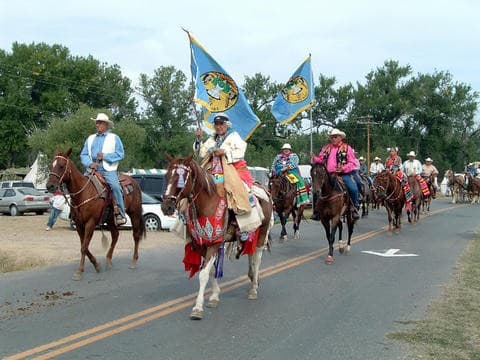
Long before they were known as the Crow, the people who call themselves the Apsáalooke were the children of the large-beaked bird—a name bestowed by their Hidatsa relatives that may have originally summoned the image of the mythical Thunderbird.
The name they gave themselves was Apsáalooke—the "children of the large-beaked bird." When neighboring Hidatsa villagers spoke the name to French interpreters, the words were rendered as gens du corbeau, and so they entered the English-speaking world simply as the Crow. The exact identity of the avian ancestor that inspired the name has slipped beyond the horizon of recorded history, though among the Apsáalooke, it is widely understood to refer not to the common scavenger of the fields, but to the mythical, thunder-making bird of the sky. This translation was only the first of many reinventions. For centuries, the story of the Crow was one of constant movement, a geographic and cultural metamorphosis that saw them transform from woodland farmers in the East into some of the most formidable, horse-rich nomads of the high Northern Plains.
This journey began far from the wind-swept basins of Montana. In the twelfth or thirteenth century, the ancestral Crow and Hidatsa lived south of Lake Erie in the Ohio Country. Driven westward by shifting tribal expansions, they migrated through Illinois and Minnesota, eventually settling south of Lake Winnipeg. There, they maintained a dual existence, cultivating crops in semi-permanent villages while venturing out to hunt bison. By the mid-sixteenth century, pressure from the Ojibwe and Cree forced them further west toward the Upper Missouri River. A subsequent stay near Devil’s Lake in North Dakota ended in the late seventeenth century with a permanent fracture. According to tribal tradition, a dispute over a bison stomach led the Crow to split from the Hidatsa proper—an incident that earned them the Hidatsa moniker Gixáa-iccá, "Those Who Pout Over Tripe." Guided westward by a vision of sacred tobacco received by the leader No Intestines, the Crow abandoned the river-basin agricultural life entirely, driving out the Shoshone and establishing themselves as the masters of the Yellowstone River valley.
By the early nineteenth century, the Apsáalooke had organized into three independent groupings that roamed distinct ecological niches, reuniting primarily for mutual defense. The largest group, the Ashalaho (Mountain Crow, or "Many Lodges"), claimed the Rocky Mountains and the foothills along the Upper Yellowstone, their territory bordered on the east by the Black Hills. The Binnéessiippeele (River Crow, or "Those Who Live Amongst the River Banks") patrolled the Yellowstone, Musselshell, and Wind River valleys—a region known as the Powder River Country. The Eelalapito ("Kicked in the Bellies") occupied the rugged Bighorn Basin, hemmed in by the Bighorn and Absaroka ranges. A fourth ancestral band, the Bilapiluutche ("Beaver Dries its Fur"), had long since vanished from their rolls, likely merging with the Kiowa in the seventeenth century. Together, these groups controlled an empire of grass and stone that stretched from the headwaters of the Yellowstone to the mouth of the Missouri.
The catalyst that elevated the Crow to the height of their power was the horse. Arriving on the Northern Plains around 1730, the animal revolutionized bison hunting and warfare. Though the brutal northern winters kept Crow horse herds smaller than those of southern tribes, the Crow, along with the Hidatsa and Shoshone, became legendary breeders and dealers. This wealth, however, made them a constant target. Horse-poor tribes from all directions—the Blackfoot, Gros Ventre, Assiniboine, Pawnee, and Ute—mounted incessant raids against them. To the east, a massive migration of Lakota Sioux and Cheyenne, themselves displaced from the woodlands, began pressing hard against the Crow. Equipped with firearms acquired through the fur trade, these rival coalitions launched a century-long campaign for control of the northern hunting grounds. The Crow found themselves surrounded, fighting a desperate, multi-front war to defend their territory against the Blackfoot Confederacy to the north and the formidable Lakota-Cheyenne-Arapaho alliance to the south and east.
By the mid-nineteenth century, the sheer numerical superiority of their enemies began to tell. The Treaty of Fort Laramie in 1851 had recognized a vast territory centered on the Bighorn Mountains as Crow land. Yet, the treaty did little to stem the westward push of the Lakota and Cheyenne. Through conquest, these rival nations seized the eastern hunting grounds of the Crow, including the fertile Powder and Tongue River valleys, forcing the Crow further upriver. During this era of existential crisis, a young Crow boy named Plenty Coups experienced a vision that would dictate the tribe’s geopolitical strategy for the next half-century. Interpreted by tribal elders, the vision foretold that European Americans would eventually dominate the entire continent. To survive and retain any portion of their homeland, the elders concluded, the Crow must remain on peaceful terms with these newcomers.
This strategy of strategic alignment with the United States military set the Crow on a drastically different path from their neighbors. When Red Cloud’s War erupted in 1866, challenging the American presence along the Bozeman Trail, the Lakota emerged victorious, securing official control over the Powder River Basin up to the crest of the Bighorn Mountains in the Fort Laramie Treaty of 1868. The Crow watched as their ancestral lands were formally handed over to their bitterest rivals. Consequently, when the Great Sioux War broke out in 1876, Crow warriors eagerly enlisted as scouts for the U.S. Army, seeking to reclaim their lands and defeat the forces of Sitting Bull and Crazy Horse. On June 25, 1876, Crow scouts rode with Lieutenant Colonel George Armstrong Custer’s forces just before his defeat at the Battle of the Little Big Horn—a clash that took place within the boundaries of the Crow Reservation. Though the battle was a stunning victory for the Lakota and Cheyenne, the wider war ended in their defeat, leading to their forced removal to distant reservations and clearing the eastern plains of the Crow’s historic rivals.
Through their cooperation with the federal government, the Apsáalooke managed to retain a significant portion of their traditional homeland—more than 9,300 square kilometers south of Billings, Montana—while many other tribes were relocated to small, unfamiliar reservations far from their ancestral territories. In 1918, seeking to preserve and showcase their heritage in a rapidly changing modern world, the Crow organized a grand gathering, inviting members of other tribes to join them. This event evolved into the Crow Fair, held annually on the third weekend of August, which remains one of the largest celebrations of Native American culture in North America. Today, the federally recognized Crow Tribe of Montana is headquartered at Crow Agency, where they operate the Little Big Horn College. Of the roughly 14,000 enrolled tribal citizens, several thousand continue to speak the Crow language, a Missouri River Valley branch of the Siouan family. By navigating the violent pressures of tribal displacement and the onset of American expansion with calculated diplomacy, the "children of the large-beaked bird" ensured that their culture, language, and people remained rooted in the very soil where they had sought their sacred tobacco centuries before.
Connected to
3 links to entries not yet ingested in the Library.