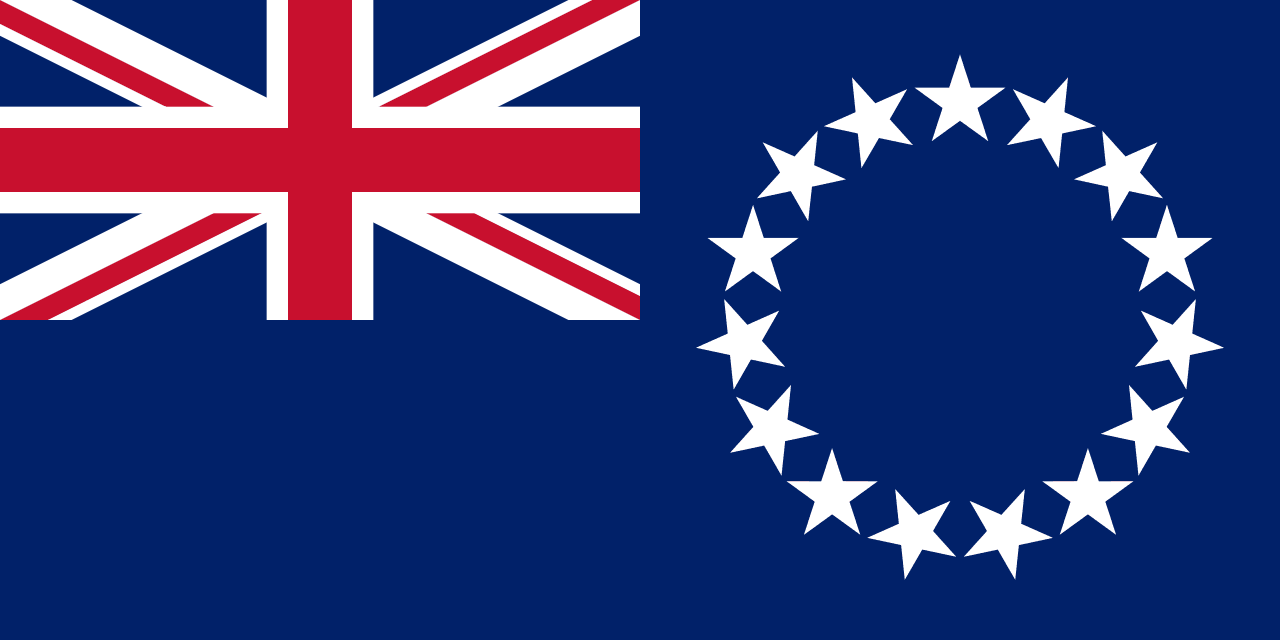
Scatter fifteen fragments of land across nearly two million square kilometers of the South Pacific Ocean, and the resulting nation is defined far more by the water that separates its people than the soil beneath their feet.
When the clock struck midnight on August 4, 1965, a new political architecture was born in the vast, salt-sprayed expanse of the South Pacific. On that day, the Cook Islands—an archipelago of fifteen scattered volcanic peaks and low-lying coral atolls—ceased to be a mere dependent territory of New Zealand and promulgated a constitution that established a novel experiment in sovereignty: self-government in "free association." It was a delicate, beautifully ambiguous arrangement. To the outside world, the Cook Islands would gradually craft their own independent foreign policy and assert their own customs regulations. Yet, under the terms of the agreement, its people retained New Zealand citizenship, a precious legal lifeline that allowed them to move freely between their quiet lagoons and the bustling, industrialized cities of the south. At the center of this transition stood Albert Henry, the charismatic leader of the Cook Islands Party, who was elected the nation's first Premier and subsequently knighted by Queen Elizabeth II. It was a moment of profound decolonization, but one that deliberately chose connection over isolation, binding a tiny population dispersed across two million square kilometers of ocean to a larger, distant partner.
To understand the world that Albert Henry inherited in 1965 is to understand an geography of radical fragmentation. The Cook Islands are divided into two starkly different worlds. The Northern Cook Islands are ancient, sunken volcanoes topped by rings of coral—six low-lying atolls that barely rise above the high-tide mark. The Southern Cook Islands are younger, hilly, fertile, and well-watered, dominated by the majestic volcanic peak of Rarotonga, which rises nearly three thousand feet into the tropical clouds. For centuries, these islands had no collective name. Their peoples, who arrived around 1000 CE in voyaging canoes likely originating from Tahiti, lived on individual islands with their own distinct identities, speaking Cook Islands Māori and Pukapukan. When European explorers first arrived, they saw only fragments. The Spanish navigator Álvaro de Mendaña de Neira sighted Pukapuka in 1595, naming it San Bernardo. In 1606, Pedro Fernandes de Queirós made the first recorded European landing on Rakahanga, naming it Gente Hermosa—the "beautiful people."
It was not until the 1770s that Captain James Cook charted the island of Manuae, naming it "Hervey Island" after the 3rd Earl of Bristol, a name that mapmakers eventually applied to the entire southern group. The moniker "Cook Islands" did not even originate with the British; it first appeared on a Russian naval chart published in the 1820s by Admiral Adam Johann von Krusenstern. For decades, the name was cartographic shorthand rather than a political reality. The islanders lived under the authority of their traditional chiefs, the Arikis, and from the 1820s onward, under the strict, puritanical influence of the London Missionary Society. The missionary John Williams arrived in 1823, initiating a rapid conversion that transformed the islanders from traditional societies into devout Protestants who built stone houses and wore European dress.
+ 7 further connections to entries not yet ingested
By the late nineteenth century, the geopolitical winds of the Pacific were shifting, and the shadow of French colonial expansion in Tahiti alarmed both local chiefs and British residents. In 1888, Queen Makea Takau Ariki petitioned Great Britain for protection, fearing a French annexation. A British protectorate was established, followed in 1900 by petitions from the chiefs for formal annexation. On October 11, 1901, the boundaries of New Zealand were officially extended to include the Cook Islands.
This formal relationship with New Zealand shaped the twentieth century for the islanders. When World War I broke out in Europe, the Cook Islands responded with a burst of imperial loyalty. Nearly five hundred young men—a significant portion of the adult male population—volunteered for service, training at Narrow Neck Camp in Devonport before shipping out to Egypt and Europe. In September 1916, Cook Islanders serving in the Pioneer Battalion alongside Māori and Pakeha soldiers experienced the horrors of industrialized warfare at Flers during the Battle of the Somme. Others labored in the searing heat of the Sinai-Palestine campaign, supplying ammunition for the Royal Artillery. But the tragedy of the war did not end on the battlefield; returning soldiers brought with them the devastating 1918 influenza epidemic, which, along with other introduced diseases, ravaged the islands' population in the years that followed.
By mid-century, the relationship underwent another fundamental transformation. On January 1, 1949, with the enactment of the British Nationality and New Zealand Citizenship Act, Cook Islanders automatically became New Zealand citizens. This legal bond set the stage for the 1965 constitution. The islanders wanted autonomy, but they did not want to surrender the economic and migratory benefits of their connection to New Zealand. Under the resulting free association, the Cook Islands became self-governing, yet New Zealand retained a responsibility for defense and external affairs, to be exercised in consultation with the island government.
This constitutional arrangement unleashed a dramatic demographic shift. Over the decades following 1965, the pull of New Zealand’s economy transformed the Cook Islands into a nation split between its homeland and its diaspora. By the early twenty-first century, the census recorded fewer than fifteen thousand people living in the islands themselves, with the vast majority concentrated on Rarotonga and its capital, Avarua. Meanwhile, the diaspora swelled. More than eighty thousand people of Cook Islands descent now reside in New Zealand, with another twenty-eight thousand making their homes in Australia.
For those who remained, the economy transitioned from the nineteenth-century trades of copra, fruit exports, and whaling station logistics to a modern service-driven model. Tourism became the undisputed lifeblood of the nation, drawing over 160,000 visitors annually to the pristine white sands of Aitutaki and the dramatic volcanic ridges of Rarotonga. To protect this fragile paradise, the Cook Islands established Marae Moana in 2017, creating the world's largest marine protected area by size—a vast sanctuary covering nearly two million square kilometers of ocean.
Yet, the legacy of 1965 remains an active, evolving conversation. In 2019, discussions emerged to change the nation’s name to a traditional Māori title that would better reflect its Polynesian heritage, moving away from the colonial stamp of Captain Cook. While the diaspora resisted a total erasure of the English name, the debate highlighted a deeper truth: the Cook Islands are no longer merely a passive dependency on the edge of the world. In recent decades, the country has pursued an increasingly assertive and distinct foreign policy, joining regional bodies like the Pacific Islands Forum and charting its own course in the modern Pacific. The experiment that began at midnight in 1965 proved that a small island nation could hold its own on the global stage, anchored by its history but sailing confidently into its own future.