Person · 69 BCE – 30 BCE · Ancient Egypt
Cleopatra
- Also known as
- Cleopatra 7k
- Cleopatra Filopator Nea Thea
- Cleopatra Philopator
- Cleopatra Philopator
- Cleopatra Tea Filopatore
- Cleopatra Tis Sat
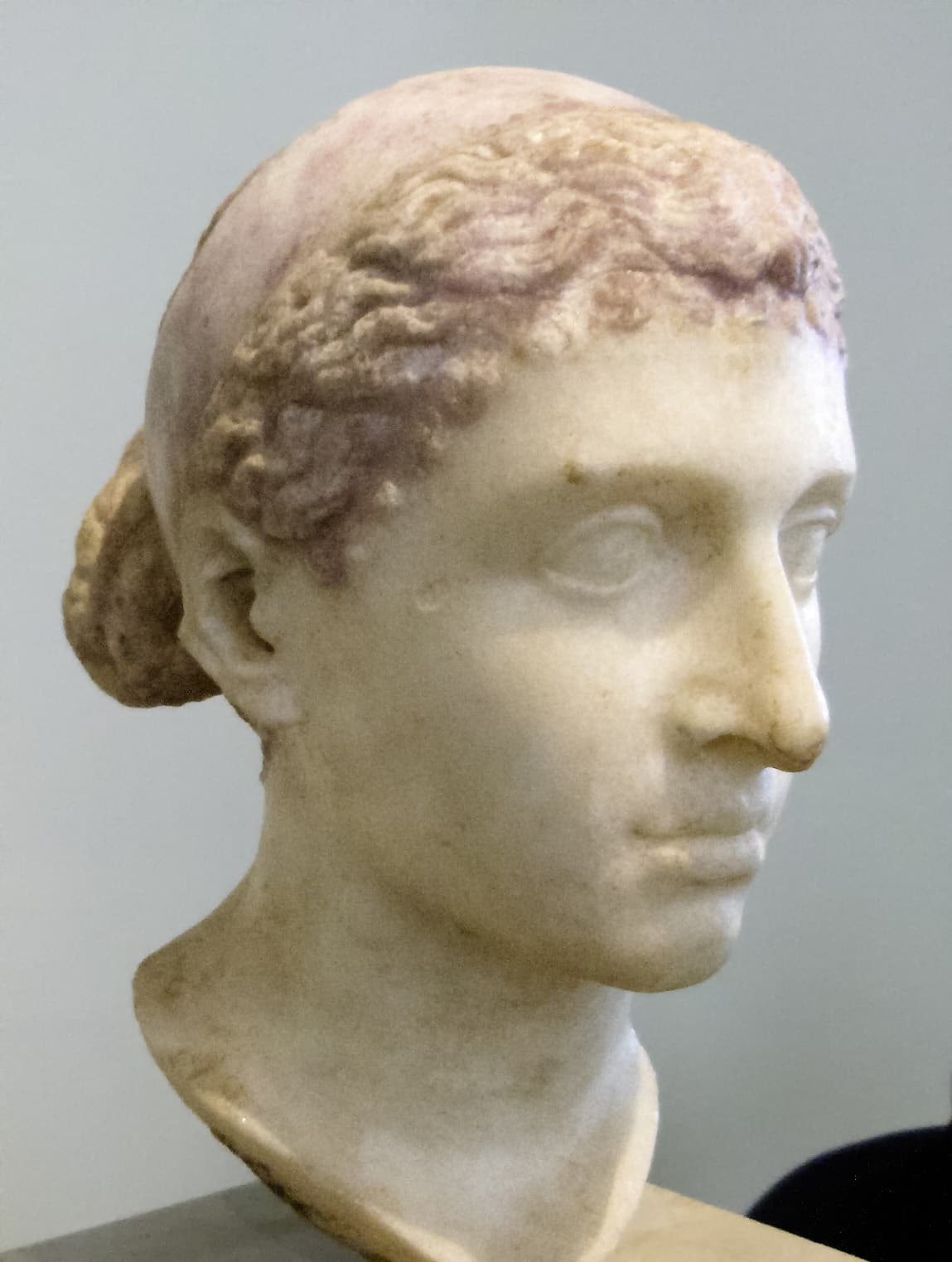
The Ptolemaic rulers of Egypt had governed from Alexandria for nearly three centuries, yet not one of them bothered to learn the language of the people they ruled—until Cleopatra VII Thea Philopator.
On a spring morning in the fifty-second year before the common era, an inscription was carved into the sandstone walls of the Temple of Hathor at Dendera. It recorded a young woman, just seventeen years old, taking her place as regent alongside her father, the bankrupt and beleaguered Ptolemy XII Auletes. Her name was Cleopatra, meaning "glory of her father," and her family, the Ptolemaic dynasty, had ruled Egypt for nearly three centuries. Yet they were not Egyptian. They were Macedonian Greeks, descendants of Ptolemy I Soter, the general who had seized the land of the Nile after the death of Alexander the Great. For three hundred years, these monarchs had resided in the multicultural, glittering Mediterranean capital of Alexandria, governing their kingdom as Hellenistic Greek lords. They spoke Greek, thought in Greek, and famously refused to learn the native tongue of the millions they ruled. Cleopatra would break that silence. She was the first of her line to learn the Egyptian language, alongside a staggering array of others—including Arabic, Hebrew or Aramaic, the Syrian tongue, Median, Parthian, and the language of the southern Troglodytes. This linguistic mastery was not a mere intellectual hobby; it was the diplomatic architecture of a woman who intended to reclaim an empire.
The Egypt Cleopatra inherited in 51 BCE, upon her father’s death, was a sovereign state in name only. It was suffocating under a massive mountain of debt to the Roman Republic—specifically to Roman financiers who had bankrolled her father’s reinstatement after he was exiled by his own subjects. Among her first duties as queen was a journey south to Hermonthis, near the ancient capital of Thebes, to install a new sacred Buchis bull, the living intermediary of the war god Montu. It was a traditional gesture of pharaonic piety, but it was performed against a backdrop of impending catastrophe: the Nile was failing to rise, drought was bringing famine, and Alexandria was terrorized by the Gabiniani, a lawless garrison of Gallic and Germanic Roman soldiers left behind to enforce Rome’s financial interests. Compounding these crises was a bitter domestic civil war. Cleopatra had been named joint heir with her younger brother, Ptolemy XIII, whom she was expected to marry in accordance with Ptolemaic custom. Instead, the siblings clashed, and Cleopatra was driven from Egypt into Syria to amass an army to fight for her birthright.
The pivot point of Cleopatra's life, and of the Mediterranean world, occurred in 48 BCE when the titanic civil war of the Roman Republic spilled onto Egyptian shores. Pompey the Great, having lost the Battle of Pharsalus to Julius Caesar, fled to Egypt seeking asylum; he had been a protector of the young Ptolemies' father. Instead, the advisors of the young Ptolemy XIII, seeking to ingratiate themselves with the victorious Caesar, had Pompey ambushed and decapitated the moment he stepped ashore. When Caesar arrived in Alexandria days later, he was presented with the severed head of his great rival—a sight that reportedly horrified him. Occupying the royal palace, Caesar attempted to mediate between the warring siblings. Cleopatra, realizing she needed to bypass her brother's blockades to state her case, slipped into the palace to meet the Roman dictator. It was an encounter that instantly reshaped history. Caesar, captivated by her sharpness and political resolve, championed her cause. The decision ignited the Alexandrian War: Ptolemy XIII’s forces besieged Caesar and Cleopatra within the royal palace quarter. Only the arrival of Roman reinforcements broke the siege, culminating in the Battle of the Nile, where the young Ptolemy XIII drowned in his heavy armor.
Connected to
- born in · died inAlexandria331 BCE
+ 12 further connections to entries not yet ingested