Person · 4th c. CE – 5th c. CE · Gupta and Medieval India
Chandragupta II
- Also known as
- Chandra Gupta II
- Chandra Gupta II
- Chandra Gupta II
- Chandra Gupta II de Magadha
- Chandra Gupta II de Magadha
- Chandragupta 02
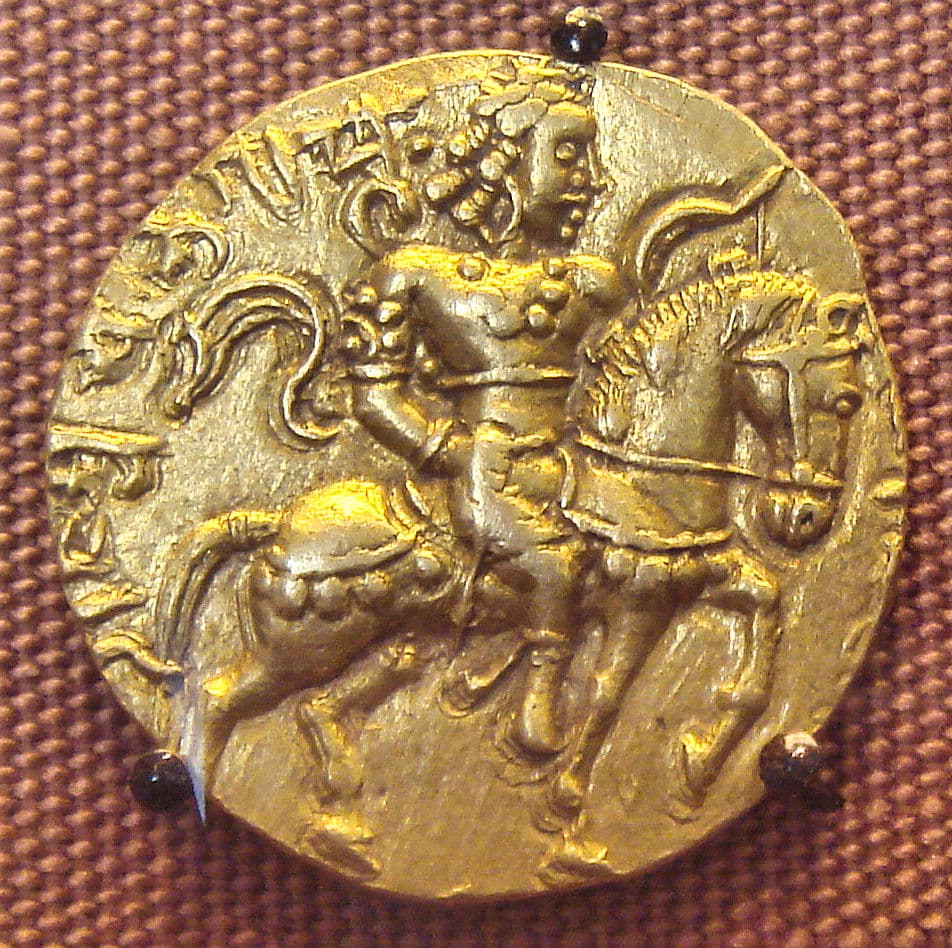
To understand the height of India’s classical age, one must look to the reign of Chandragupta II, the emperor who steered the Gupta Empire to its absolute zenith between roughly 375 and 415 CE.
In the late fourth century CE, a traveler journeying across the northern plains of India would have encountered an empire at the absolute peak of its physical and intellectual confidence. At the center of this world was a monarch who chose to write his legacy not only in the blood of his enemies but in the enduring medium of rust-resistant iron. On the outskirts of modern Delhi stands a solitary iron pillar, soaring over seven meters high, forged with a metallurgical purity that has defied the monsoon rains of sixteen centuries. Upon its surface is carved an inscription commemorating a king named Chandra, a ruler whose fame was "written on the earth by his prowess" and whose breath, like a great wind, shook the southern oceans. Modern scholars widely identify this figure as Chandragupta II, the monarch who assumed the ultimate, myth-laden title of Vikramaditya—the "Sun of Valor"—and presided over the golden meridian of the Gupta Empire.
To inherit the Gupta throne in roughly 375 CE was to inherit a legacy of relentless martial expansion. Chandragupta’s father, Samudragupta, had spent a lifetime marching his armies across the subcontinent, transforming a regional Ganges valley kingdom into a sprawling imperial power. Yet the transition of power from father to son was likely far from seamless. While official genealogies present a clean line of succession, a fragmented Sanskrit play titled Devichandraguptam hints at a darker, more dramatic interlude. The drama tells of an elder brother, Ramagupta, who ascended the throne first but proved cowardly when cornered by a Shaka (Western Kshatrapa) adversary, agreeing to surrender his queen, Dhruvadevi, to save his own skin. In a daring counterplot, the young prince Chandragupta disguised himself as the queen, infiltrated the enemy camp, and slew the Shaka king. Returning in triumph, Chandragupta dethroned his disgraced brother, claimed the crown, and married Dhruvadevi. While historians continue to debate whether this story is historical truth or clever dynastic propaganda designed to legitimize a usurpation, it is undeniable that Chandragupta II possessed a political mind of the highest order, marrying raw military aggression with sophisticated dynastic statecraft.
Where his father had conquered by the sword alone, Chandragupta II secured his frontiers through strategic marriages. To the south of the Gupta heartland lay the Deccan plateau, dominated by the powerful Vakataka dynasty. Rather than engaging them in a costly war of attrition, Chandragupta married his daughter, Prabhavatigupta, to the Vakataka king Rudrasena II. When the Vakataka king died prematurely, Prabhavatigupta assumed the regency for her young sons, ruling for twenty years. During this two-decade window, Chandragupta’s court effectively integrated the Vakataka administration into the Gupta imperial orbit, gaining a stable southern border and access to the vital trade routes of the peninsula. Further south, he extended his influence over the Kuntala region of modern Karnataka by forging a marriage alliance with the Kadamba dynasty. This web of alliances allowed him to turn his full military attention toward the west, where the Western Kshatrapas—Scythian-descended rulers who had controlled the lucrative ports of Gujarat and Malwa for centuries—still held sway.
Connected to
- citizen ofGupta Empire320 CE
- religionHinduism
- father · child ofSamudragupta335 CE
+ 10 further connections to entries not yet ingested