Person · 505 CE – 565 CE · Late Antique and Byzantine
Belisarius
- Also known as
- Beileasáirias
- Belisaire
- Belisaire
- Belisar
- Belisar
- Belisar
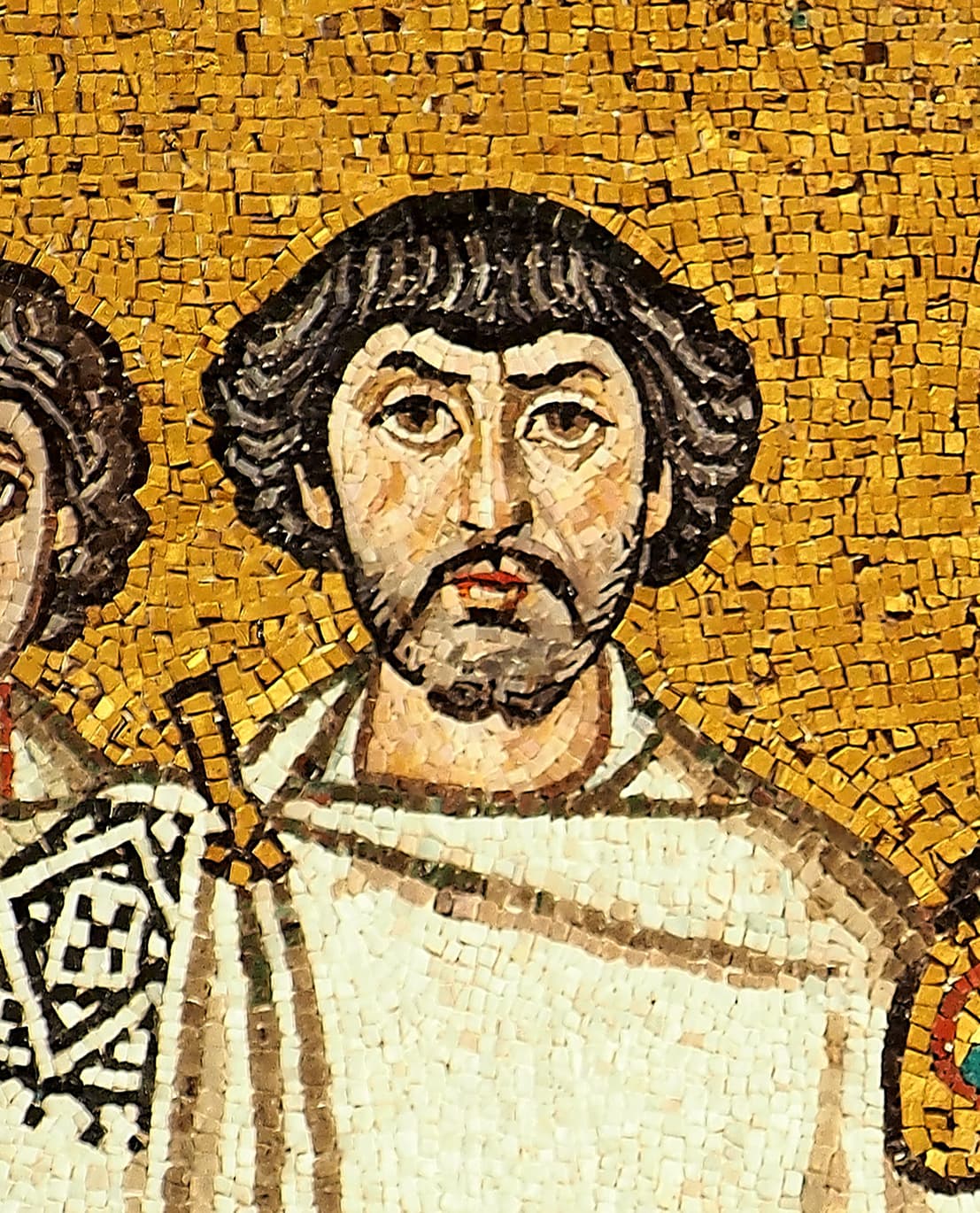
To rebuild an empire on the cheap requires a commander who can conquer with illusions as effectively as with steel.
On an afternoon in January 532, the grandest city in the Western world was burning. In Constantinople, the chariot-racing factions of the Blues and Greens—normally bitter, murderous rivals—had united in a rare, furious spasm of class hatred and anti-imperial rebellion known as the Nika riots. The Emperor Justinian, cowering in his palace overlooking the Hippodrome, contemplated flight as the crowd outside proclaimed a senator named Hypatius as their new emperor. The civil service had collapsed; the corrupt ministers who had funded the empire’s grand designs through brutal taxation were hiding. When the imperial guards refused to act, Justinian turned to a young general from the Thracian borderlands: Flavius Belisarius. Just thirty-two years old, Belisarius had already tasted both catastrophic defeat and miraculous victory on the Persian frontier. Now, he was ordered to turn his swords upon the citizens of the empire he had sworn to protect.
Unable to reach Hypatius through the locked imperial box, Belisarius led his private household regiment—the bucellarii—around the exterior of the towering stadium. These were not the conscripts of old Rome; they were heavily armored, highly trained cavalrymen, equipped with Hunnish composite bows, long lances, and broad spathas, capable of acting as both horse archers and shock shock-troops. With the eunuch Narses blocking the exits and the general Mundus charging from another flank, Belisarius unleashed his men into the packed, unarmed masses of the Hippodrome. When the slaughter ended, between thirty thousand and sixty thousand citizens lay dead on the stone tiers. The rebellion was drowned in blood, the throne of Justinian was secured, and the young general had proven an indispensable, terrifyingly loyal instrument of the imperial will.
This absolute loyalty, tested against the corrosive suspicion of his sovereign, would define the rest of Belisarius’s life. Born around 500 CE in the fortified town of Germania, on the rugged borders of Thrace and Macedonia, Belisarius was likely of Thraco-Roman or Illyro-Roman stock. He rose through the ranks of the imperial bodyguard under Justin I, eventually catching the eye of the emperor’s ambitious nephew, Justinian. When Justinian ascended the throne, he gave Belisarius command of the eastern armies. The young general’s early career in the Iberian War against the Sassanid Empire was a volatile mix of embarrassment and genius. He suffered clear defeats at Tanurin and Mindouos, and was forced to flee the field at Callinicum after his soldiers mutinied to force a battle. Yet at Dara, in 530 CE, he had delivered a masterpiece of tactical ingenuity. Recognizing the superior mobility of the Sassanid cavalry, he dug a complex network of trenches to funnel the Persian forces, allowing him to launch a devastating counterattack from their rear—a tactic he had shrewdly adapted from a previous Persian victory over his own forces.
With the eastern frontier temporarily stabilized by a costly peace treaty and the domestic population cowed by the Hippodrome massacre, Justinian looked westward toward the lost provinces of the Western Roman Empire. The first target was the Vandal Kingdom of North Africa. The Vandals, adherents of the Arian heresy, had spent decades persecuting the Nicene Christians of Carthage and refusing to acknowledge the supremacy of the emperor. When the Vandal military leader Gelimer usurped the throne from his cousin, a friend of Justinian, the emperor saw his pretext. Many imperial generals shrunk from the assignment, remembering previous failed expeditions, but Belisarius accepted.
In June 533, an armada of five hundred transport ships and ninety-two warships set sail from Constantinople. Belisarius commanded a finely tuned force of some seventeen thousand men, including his loyal bucellarii, Hunnic horse archers, and Herul mercenaries. On the long voyage across the Mediterranean, Belisarius’s meticulousness and capacity for iron discipline became apparent. When two drunken Huns murdered a comrade during a stop, he had them promptly executed, preserving order through a series of calculated speeches. To prevent the massive fleet from scattering at night, he devised a system of lantern signals and distinctive markings on his staff-ships. When five hundred of his soldiers died from eating spoiled bread provided by corrupt contractors, he salvaged the expedition’s morale by securing fresh provisions during stops in Sicily.
The Vandal campaign was a triumph of stunning velocity. Within nine months of landing, Belisarius shattered the Vandal forces at Ad Decimum and Tricamarum. Gelimer, whose forces lacked horse archers and experienced commanders to counter the Byzantine tactics, was forced to surrender. Belisarius entered Carthage in triumph, restoring the Roman administration and returning the African provinces to the imperial fold. In Constantinople, Justinian rewarded his general with a triumph—the first celebrated in the city—and the ancient dignity of the consulship. Yet even as medals were struck in his honor, the seeds of suspicion were planted. Belisarius’s sheer efficiency made him a target for the envy of a paranoid emperor who ruled from a desk, far from the adulation of the legions.
Justinian’s grand design next turned to Italy, the historic heart of the empire, then ruled by the Ostrogoths. Belisarius invaded Sicily in 535, swept through southern Italy, took Naples by storm, and entered Rome. What followed was one of the most grueling sieges in military history. For over a year, Belisarius and a small garrison held the vast, crumbling capital against the overwhelming weight of the Ostrogothic army. Using every trick of military deception, conserving his meager resources, and relying on the deadly precision of his horse archers, he wore down the Goths until they lifted the siege. He pursued them north, eventually capturing the Gothic stronghold of Ravenna and taking the Gothic king Vitiges captive.
At Ravenna, the desperate Ostrogoths, recognizing the general’s genius and disgusted by their own rulers, offered Belisarius a crown: they would submit to him if he declared himself Emperor of the West. It was a moment that would have tempted any lesser man. Belisarius feigned acceptance to gain entry to the city, secured its surrender, and then promptly declared his unwavering loyalty to Justinian. He rejected the crown and returned to Constantinople in 540 with the captive king and the Gothic treasury. But the offer alone was enough to poison Justinian’s mind. Belisarius was never fully trusted again.
The remainder of his career was a tragic cycle of neglect, desperation, and sudden, frantic recalls. In 541, he was sent back to the eastern front to check the Persian king Chosroes, but without the resources or the authority he required, he achieved no lasting victory. He found himself under a cloud of imperial disfavor, his fortunes protected only by the influence of his wife, Antonina, who was a close confidante of the Empress Theodora. When the Goths revolted and reconquered much of Italy, Justinian sent Belisarius back with a force so laughably small and ill-equipped that he could do little more than hold his enemies at bay for five frustrating campaigns, before being replaced by the eunuch Narses, who was given the massive army and funding denied to Belisarius.
Belisarius retired to a quiet, sidelined existence in Constantinople, a relic of an era of grand reconquests that the treasury could no longer sustain. Yet his city would call on him one last time. In 559, an incursion of Bulgars swept through Thrace, reaching the very outskirts of Constantinople and sending the capital into a state of wild panic. The aged, neglected veteran was summoned from his retirement. Lacking regular troops, Belisarius assembled a motley force of local peasants, retired veterans, and volunteers. Utilizing his lifelong mastery of deception and terrain, he made his small force appear far larger than it was, ambushed the invaders, and drove them back from the city walls.
It was his final victory, and like the others, it was rewarded with imperial jealousy. In 562, the suspicious Justinian accused his aging champion of complicity in a conspiracy against the throne. Belisarius’s vast fortunes were confiscated, and he was placed under house arrest in his palace. Though he was pardoned and restored to favor a year later, his spirit and health were broken. He died in March 565, only a few months before the death of the emperor he had spent his life defending.
In the centuries that followed, a legend arose in the streets of Constantinople that the great general, blinded by a vengeful Justinian, spent his final days wandering as a beggar, holding out a wooden bowl to the citizens he had saved. Though this story is a myth, the reality was scarcely less poignant. Belisarius was perhaps the last true Roman general—a commander who fought in the style of the old Republic, combining absolute personal bravery with an elastic, innovative military mind. He expanded the borders of a dying empire, not with the limitless legions of Augustus, but with a handful of mercenaries and his own household guards, serving a master who could never forgive him for his greatness.
Connected to
- citizen ofByzantine Empire395 CE
- died inConstantinople330 CE
+ 12 further connections to entries not yet ingested