Event · Delhi Sultanate and Mughal
Battle of Plassey
- Also known as
- bataille de Plassey
- Batalha de Plassey
- Batalha de Plassey
- Batalio di Plassey
- batalla de Plassey
- batalla de Plassey
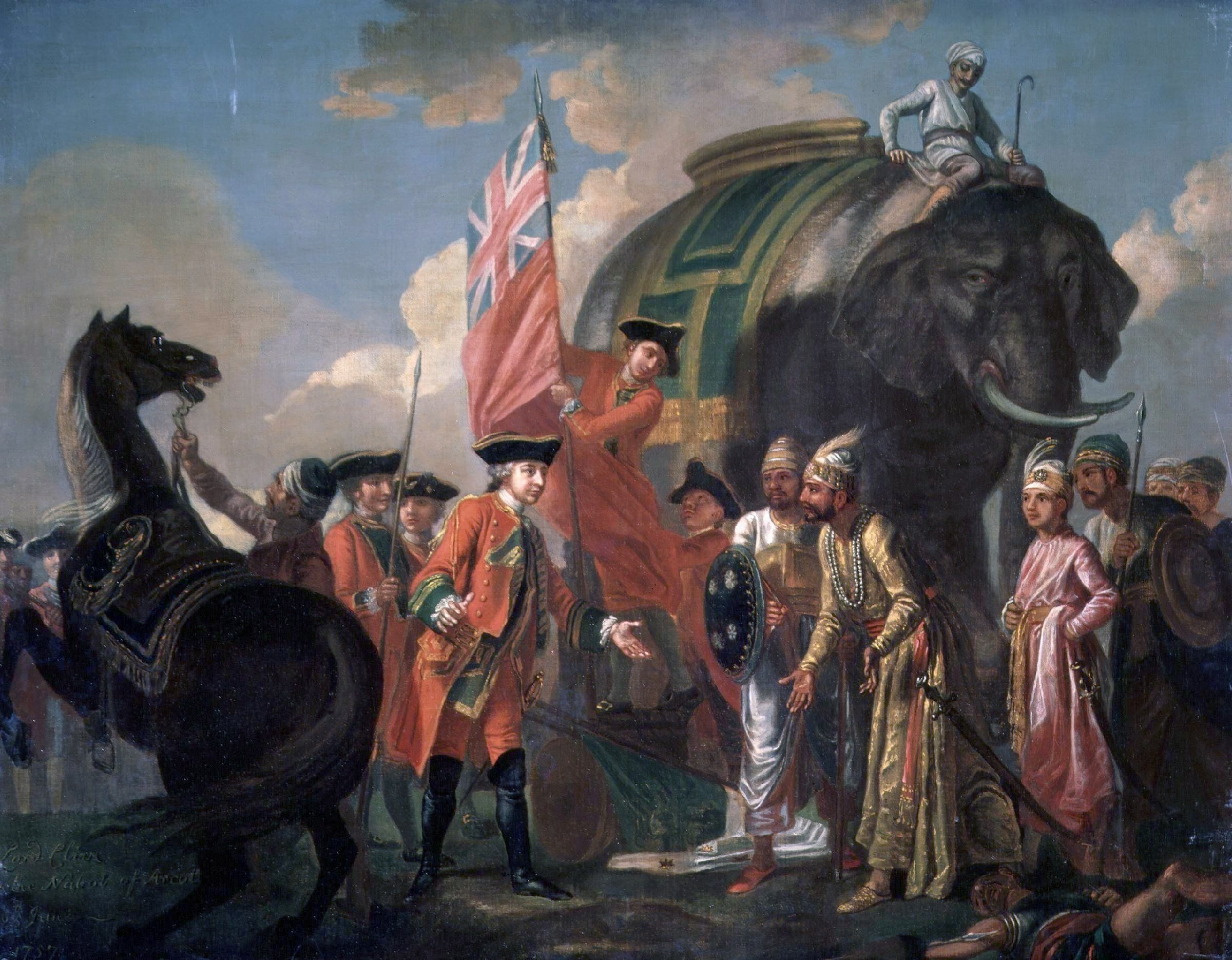
An army of fifty thousand soldiers, forty cannons, and ten war elephants should have easily swept the field on June 23, 1757, when they met a British force of just three thousand on the banks of the Hooghly River.
The humid air of Bengal in June 1757 was heavy with more than just the impending monsoon. On the banks of the Hooghly River, in a mango grove known as Palashi—Anglicized by its occupiers as Plassey—some fifty thousand soldiers, forty cannons, and ten armored war elephants stood arrayed under the banner of Siraj-ud-Daulah, the young Nawab of Bengal. Facing this imposing host was a comparatively minuscule force: just three thousand men, led by a thirty-one-year-old British lieutenant-colonel named Robert Clive. By all the established rules of warfare, the Nawab’s army should have swept the redcoats into the river before noon. Yet, as the morning mist burned off, the vast majority of the Nawab’s massive army stood entirely motionless, their weapons silent. They were waiting for a signal that would never come, bystanders to a betrayal that had already been bought and paid for in the counting houses of Murshidabad. The eleven hours that followed would not resemble a classic military triumph; instead, they would form a theatrical, sordid, and highly consequential transaction that laid the foundation for the British Empire in India.
The road to the mango grove at Plassey had been paved by years of shifting power dynamics on the subcontinent. For decades, the British East India Company had operated as a heavily armed merchant enterprise, maintaining fortified trading posts like Fort William in Calcutta. Under the long reign of the previous Nawab, Alivardi Khan, a delicate equilibrium had been maintained. Alivardi was a strong ruler who successfully repelled six Maratha invasions between 1741 and 1751, eventually buying peace by agreeing to pay the Marathas an annual tribute of 1.2 million rupees. He kept a watchful eye on the European traders, well aware of how the British and French had turned southern India into a bloody chessboard during the Carnatic Wars. Alivardi permitted the British to dig a defensive moat—the Maratha Ditch—around Calcutta, but he strictly limited their military footprint and extracted heavy payments for the privilege of doing business. The British, however, regularly abused their trading privileges, issuing customs-free passes to native merchants and depriving the state treasury of crucial revenue, while sheltering wealthy subjects who sought to escape the Nawab's tax collectors.
When the twenty-three-year-old Siraj-ud-Daulah succeeded his grandfather in April 1756, this fragile truce shattered. Young, hot-tempered, and deeply suspicious of the European companies, the new Nawab viewed the British as an existential threat to his sovereignty. His anxieties were well-founded: with the Seven Years' War looming in Europe, both the British and the French had begun strengthening their fortifications in Bengal without asking his permission. When the British ignored his direct order to cease construction, Siraj-ud-Daulah marched on the British factory at Cossimbazar with three thousand men, taking several officials prisoner, before advancing on Calcutta. The city’s defenses were woefully inadequate, possessing a garrison of fewer than five hundred men, including untrained militia and volunteers. On June 20, 1756, after a brief siege, Fort William surrendered. That night, according to British accounts, 146 prisoners were crowded into a suffocating, eighteen-by-fourteen-foot military dungeon with only two small windows. By the time the door of the "Black Hole of Calcutta" was opened the following morning, only twenty-three survivors staggered out; the rest had succumbed to asphyxiation, delirium, and the oppressive summer heat. Though evidence suggests the Nawab was entirely unaware of the dungeon's horrific conditions, the tragedy provided the British with a potent, martyr-draped rallying cry.
Connected to
3 links to entries not yet ingested in the Library.