Place · 762 CE · Islamic Caliphates
Baghdad
- Also known as
- Baagdad
- Bag'dad
- Bagdad
- Bagdad
- Bagdad
- Bagdad
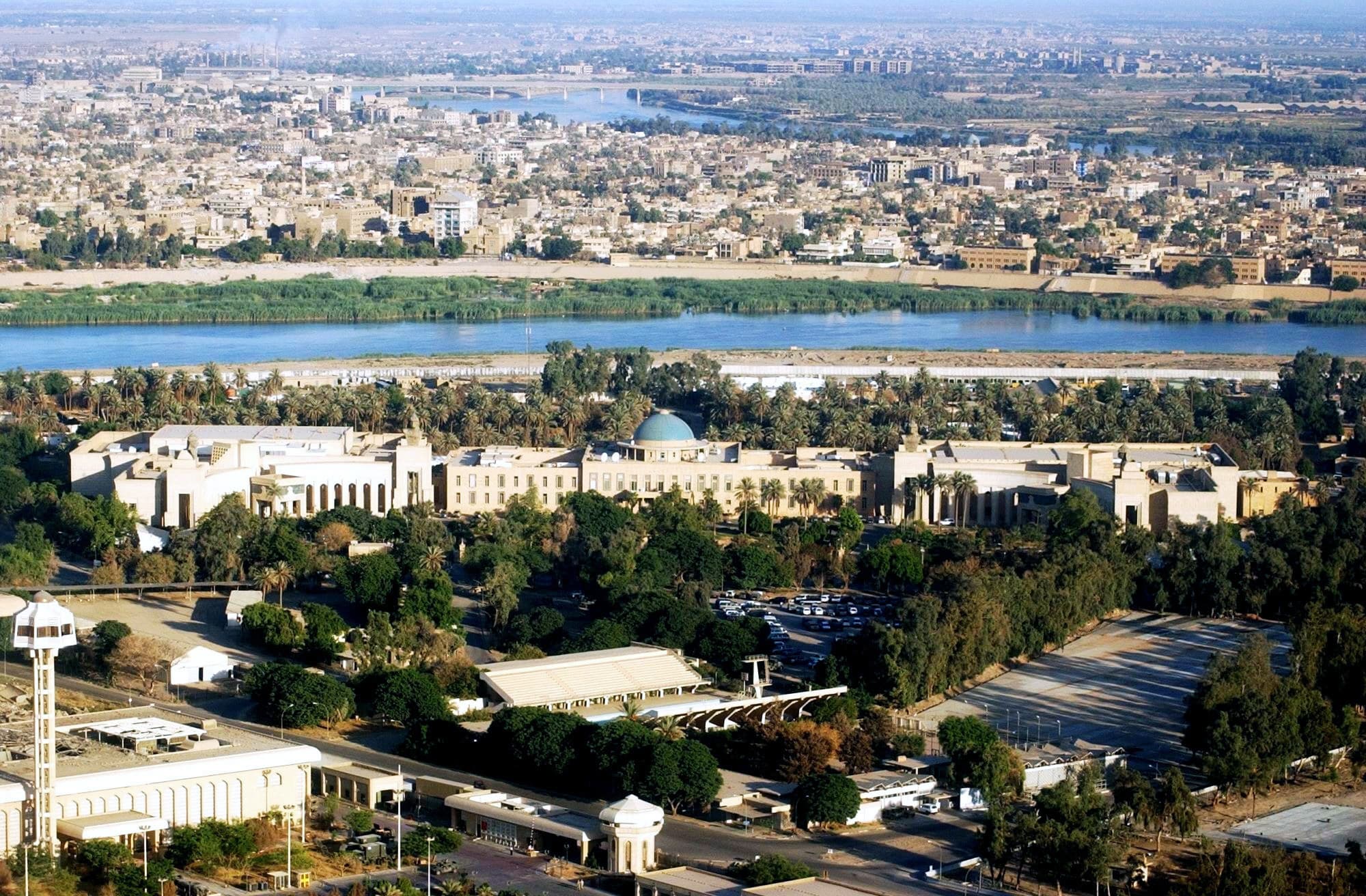
When the Abbasid caliph Al-Mansur founded a new capital on the banks of the Tigris in 762 CE, he chose a site with roots stretching back to the Neo-Babylonian period.
On the thirtieth of July in the year 762 CE, under a sky scrutinized by the empire’s premier astrologers, the second Abbasid caliph, Abu Ja’far al-Mansur, initiated the construction of a new capital on the banks of the Tigris. For years, the victorious Abbasids, having overthrown the Umayyad Dynasty, had been seeking a geographic anchor that could secure their vast, newly won Islamic empire. They found it in a dusty Mesopotamian plain where settlement had quietly persisted since at least the Neo-Babylonian period. To the caliph’s advisers, the site was rich with prophecy and promise. Al-Mansur’s guides in this endeavor were the Barmakids, an influential family of Iranian administrators who understood the deep structural traditions of Near Eastern statecraft. Historians would later record that Christian monks residing in the area had long spoken of a ancient prophecy: a great leader named Miklas would one day build a magnificent city on these very banks. Al-Mansur, who in his youth had been called Miklas, accepted the omen.
To realize this imperial vision, the caliph did not look to the rectangular, grid-based urban planning of the Greco-Roman world. Instead, he commissioned two of the region's greatest scientific minds to design a layout that was fundamentally cosmic and ancient. Naubakht, a Persian Zoroastrian astrologer, and Mashallah, a Jewish scholar from Khorasan, mapped out a city of concentric circles—a shape reflecting the grand Sasanian city of Gur and older Mesopotamian settlements like Mari. Naubakht calculated the exact moment to break ground, waiting until the sun entered the zodiacal sign of Leo, a constellation associated with fire, expansion, and enduring strength. From that auspicious alignment arose the "Round City," a perfect two-kilometer-wide circle designed to symbolize the paradise described in the Qur'an. Over the course of four years, more than one hundred thousand engineers, artisans, and laborers, recruited from across the known world, transformed the Tigris clay into a fortress of unparalleled scale. They baked massive clay bricks, eighteen inches square, under the supervision of the venerable jurist Abu Hanifah. They raised outer walls of staggering proportions—reaching up to thirty meters in height and forty-four meters in thickness—reinforced by a second inner wall, defensive towers, a deep moat, and four monumental gates. Named after their regional destinations—Kufa, Basra, Khurasan, and Syria—these gates featured iron doors so heavy they required several men to swing them open.
At the literal and figurative center of this round metropolis stood the caliph's residence, the Golden Gate Palace, topped by a grand, forty-eight-meter green dome that dominated the horizon. Only the caliph himself was permitted to approach the palace esplanade on horseback; all others dismounted in deference to the shadow of God on Earth. Radiating outward from this central core, which also housed the grand mosque and the guard headquarters, were neat sectors divided into three judicial districts: the Round City proper, al-Karkh, and Askar al-Mahdi. To prevent the friction of daily commerce from disrupting the administrative peace of his court, al-Mansur eventually exiled the bustling markets to the southern suburb of al-Karkh. There, under the watchful eyes of market inspectors known as muhtasib, a global merchant class took root. Through an intricate network of canals that provided both drinking water and transport, the city drew the wealth of the silk, spice, and paper routes into its center. Within a single generation, this deliberate creation—officially named Madinat as-Salam, the "City of Peace," but universally called Baghdad after the ancient pre-Islamic name of the locality—eclipsed Ctesiphon, the nearby fallen Sasanian capital, and grew to rival the Chinese metropolis of Chang'an as the largest city on Earth.
At its zenith during the Islamic Golden Age, Baghdad’s population peaked at over one million residents, living in a metropolis that had evolved from an administrative fortress into the intellectual dynamo of the medieval world. This transition was fueled by the Abbasid translation movement, initiated by al-Mansur and brought to its spectacular maturity under the ninth-century caliph al-Ma'mun. Central to this intellectual explosion was the Baytul-Hikmah, or "House of Wisdom." By the mid-ninth century, this institution housed the largest collection of books and manuscripts in the world, serving as a repository where the philosophical, mathematical, and medical texts of the ancient Greeks, Persians, and Indians were translated into Arabic, commented upon, and synthesized.
The genius of Baghdad lay in its radical cosmopolitanism. While Arabic was the uncontested language of science and statecraft, the minds shaping this intellectual golden age were multi-ethnic and multi-religious. Nestorian and Jacobite Christians, Jews, Zoroastrians, Persians, and Syriacs worked alongside Arab scholars. It was here that the translator Hunayn ibn Ishaq rendered Greek medical treatises into Arabic; here that the Persian mathematician al-Khwarizmi laid the foundations of algebra; and here that al-Kindi, the "Philosopher of the Arabs," synthesized Islamic theology with Aristotelian metaphysics. In the religious sphere, scholars like al-Jahiz debated the nuances of Mu'tazili rationalist theology, while al-Tabari compiled his monumental Quranic exegesis. Yet the city was never merely an austere academy. It was a place of vibrant, sometimes chaotic, urban life. Its streets and taverns hosted chess halls, live concerts, acrobatics, and cabarets. In its public squares, professional storytellers, the al-Qaskhun, spun the fantastical, labyrinthine narratives of adventure and magic that would eventually coalesce into the global anthology of the Arabian Nights.
This golden era, however, was not destined to last. The medieval metropolis, with its public baths, fountains, and sophisticated sanitation systems, became a frequent target for foreign conquerors and domestic rivals. The ultimate catastrophe came in 1258, when the armies of the Mongol Empire breached the city's defenses, systematically destroying its grand libraries, palaces, and canals, and massacring a significant portion of its population. The House of Wisdom was destroyed, its books famously thrown into the Tigris in such quantities that the river ran black with ink. Following this ruinous blow, Baghdad entered a long, centuries-long twilight, its prominence eroded by recurrent plagues, shifting trade routes, and successive conquests by regional empires. It eventually found a quieter role as an administrative provincial center within the Ottoman Empire, exercising oversight over the historic Mesopotamian provinces of Basra, Mosul, and Shahrizor.
The twentieth century brought a tumultuous rebirth. Following the collapse of the Ottoman Empire during the First World War, the British Empire established Mandatory Iraq, designating Baghdad as its capital. When Iraq achieved independence as a monarchy in 1932, the city began to reclaim its status as a vital capital of Arab culture, a trend that accelerated during the mid-century period of Ba'ath Party rule, which brought significant infrastructural modernization, oil-funded prosperity, and urban expansion. But this modern resurgence was repeatedly fractured by conflict. The US-led invasion of Iraq in 2003 and the subsequent Iraq War inflicted devastating damage on the city’s infrastructure and resulted in the tragic looting and loss of priceless historical artifacts from its museums. For years, particularly during the height of sectarian conflict and the insurgency between 2013 and 2017, Baghdad suffered under the weight of some of the highest rates of urban violence and terror in the world.
Yet, as it has done repeatedly across twelve centuries, the city on the Tigris survived. Since the territorial defeat of the Islamic State group in Iraq in 2017, the violence that defined the early twenty-first century has dramatically declined. Today, Baghdad remains the undisputed heart of Iraq, home to some eight million people—accounting for nearly a quarter of the nation's population—and generating forty percent of its economic activity. It is a city where modern reconstruction projects sit alongside monuments of profound historical and religious significance. Millions of pilgrims still travel annually to its historic sanctuaries, including the Masjid al-Kadhimayn, the Buratha Mosque, and the shrines of Abu Hanifa and Abdul-Qadir Gilani. Though its once-vibrant Jewish community has largely vanished and the Sikh pilgrims who once journeyed from India are rare, the physical landscape of Baghdad remains a complex palimpsest of churches, mosques, and mandis. In the lively coffeehouses that line its modern avenues, the spirit of intellectual debate and storytelling that defined al-Mansur’s circular dream continues to drift over the waters of the Tigris.
Connected to
- in countryAbbasid Caliphate750 CE
- in countryIlkhanate1256 CE
- place of death ofMuḥammad ibn Musa al-Khwarizmi780 CE
- in countryOttoman Empire1299 CE
- in countrySasanian Empire