Event · 1367 CE – 1521 CE · Mesoamerican Civilizations
Aztec Empire
- Also known as
- Anpi Aztèk
- Asteekide riik
- Astek imperiyası
- Astekang Imperyo
- Astekanhong Imperyo
- Atstek imperiyasi
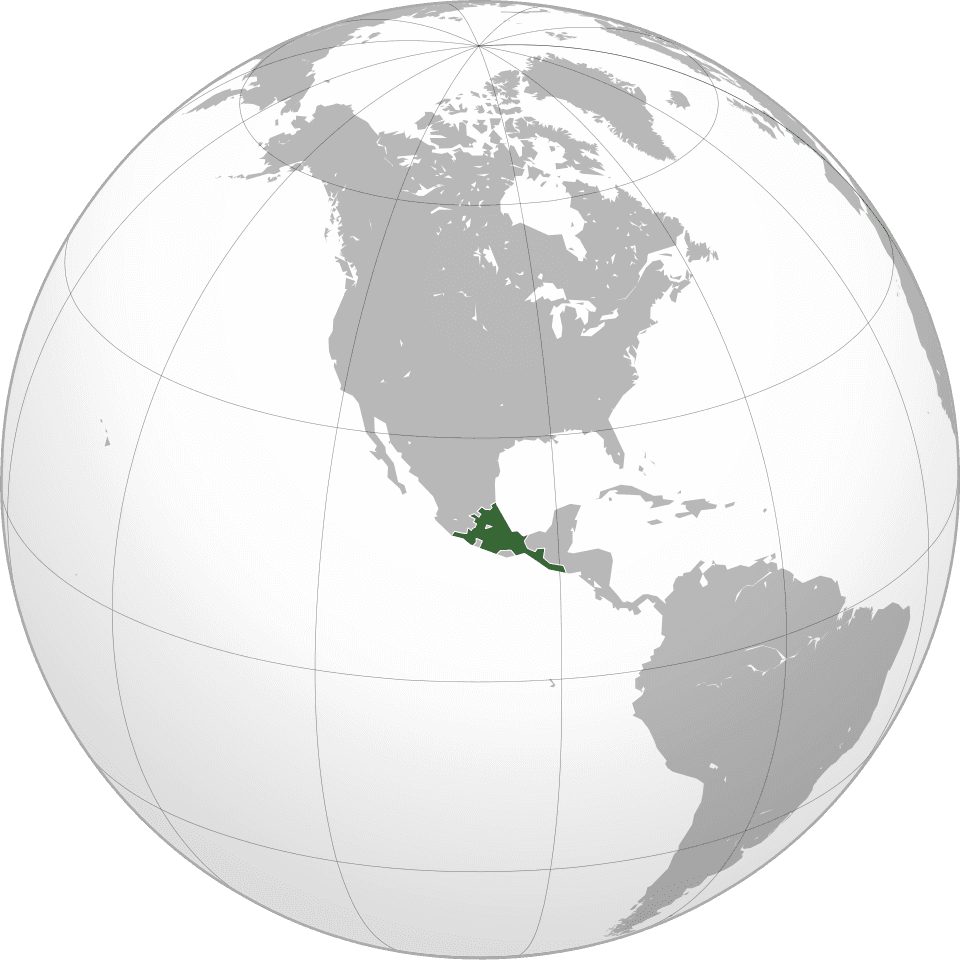
In the year 1428, out of the ashes of a civil war between the city of Azcapotzalco and its tributary provinces, three Nahua city-states forged a pact that would redefine the geography of Mesoamerica.
In the early thirteenth century, a band of northern migrants known as the Chichimecs drifted southward into the crowded, fertile Basin of Mexico. They were the latecomers of the Nahua migrations, arriving around 1250 CE to find every scrap of prime agricultural land already claimed by established, warring city-states. These newcomers, who called themselves the Mexica, were viewed by their neighbors as uncouth outsiders. Desperate for a foothold, they begged the king of Culhuacan—a prestigious city-state carrying the proud lineage of the ancient Toltecs—for a place to settle. He granted them Chapultepec, a barren, grasshopper-infested hill, and in return, the Mexica served as his ruthless mercenaries. But the arrangement ended in horror. Ordered by their god Xipe Totec, the Mexica sacrificed the Culhuacan princess sent to rule over them, flaying her skin in a ritual of dark transfiguration. When her father discovered the deed, his armies hunted the Mexica into the marshes of Lake Texcoco. There, on a muddy, uninhabited island, the refugees beheld an eagle nesting on a nopal cactus. They read it as a divine mandate. In the Mesoamerican year ōme calli (Two House, corresponding to 1325 CE), on a patch of reed-choked mud, they founded Tenochtitlan.
For the first century of its existence, Tenochtitlan was a subordinate client state, paying tribute to the formidable Tepanec empire of Azcapotzalco. The Mexica fought in the shadow of the Tepanec king, Tezozomoc, slowly masterminding their own legitimacy. In 1372 CE, they secured a royal bride from Culhuacan, elevating her son Acamapichtli as their first true tlatoani, or dynastic ruler. The tipping point arrived in 1426 CE with the death of Tezozomoc. The Tepanec succession devolved into a bitter civil war when a usurper named Maxtla seized the throne. Maxtla blockaded Tenochtitlan, demanded exorbitant tribute, and allegedly assassinated the Mexica ruler Chimalpopoca. Rather than submit, the new Mexica tlatoani, Itzcoatl, forged a desperate coalition with Nezahualcoyotl, the exiled king of Texcoco, and Tlacopan, a dissident Tepanec city. By 1428 CE, this coalition shattered Azcapotzalco. The victors formalized their partnership in 1430 CE as the Triple Alliance, or Ēxcān Tlahtōlōyān ("Three Places of Speaking"). This tripartite engine of conquest split the spoils of Mesoamerica, with Tenochtitlan and Texcoco taking the lion’s share and Tlacopan receiving a smaller portion. Within decades, this alliance transformed from a defensive pact into an aggressive, hegemonic empire stretching from the Gulf of Mexico to the Pacific.
At the heart of this rapid expansion was a radical, state-sponsored rewriting of reality. Shortly after the Triple Alliance was forged, Itzcoatl and his brilliant, scheming nephew Tlacaelel—who served as , a position akin to prime minister—initiated sweeping imperial reforms. Tlacaelel ordered the systematic burning of existing historical books, declaring that the old paintings contained lies and that it was unwise for the common people to know them. In their place, a new history was painted, casting the Mexica not as desperate northern vagrants, but as the chosen people of the cosmos. Their tribal patron, the fierce war god Huītzilōpōchtli, was elevated to the apex of the pantheon. The Mexica conceptualized the universe through , a monistic pantheism representing a single supreme divine energy, Ometeotl, which manifested in a diverse pantheon of lesser nature gods. The state religion married the refined monism of the elite with the polytheistic myths of the common people. Conquered provinces were permitted to keep their local gods, provided they added Huītzilōpōchtli to their temples and paid regular tribute.
Connected to
- had as citizenCuauhtémoc1495 CE
- had as citizenMoctezuma II1466 CE
- has partTenochtitlan1325 CE
+ 7 further connections to entries not yet ingested