Person · 980 CE – 1037 CE · Islamic Caliphates
Avicenna
- Also known as
- Abicena
- Abicià
- Abitianus
- Abitianus
- Abitianus
- Abitianus
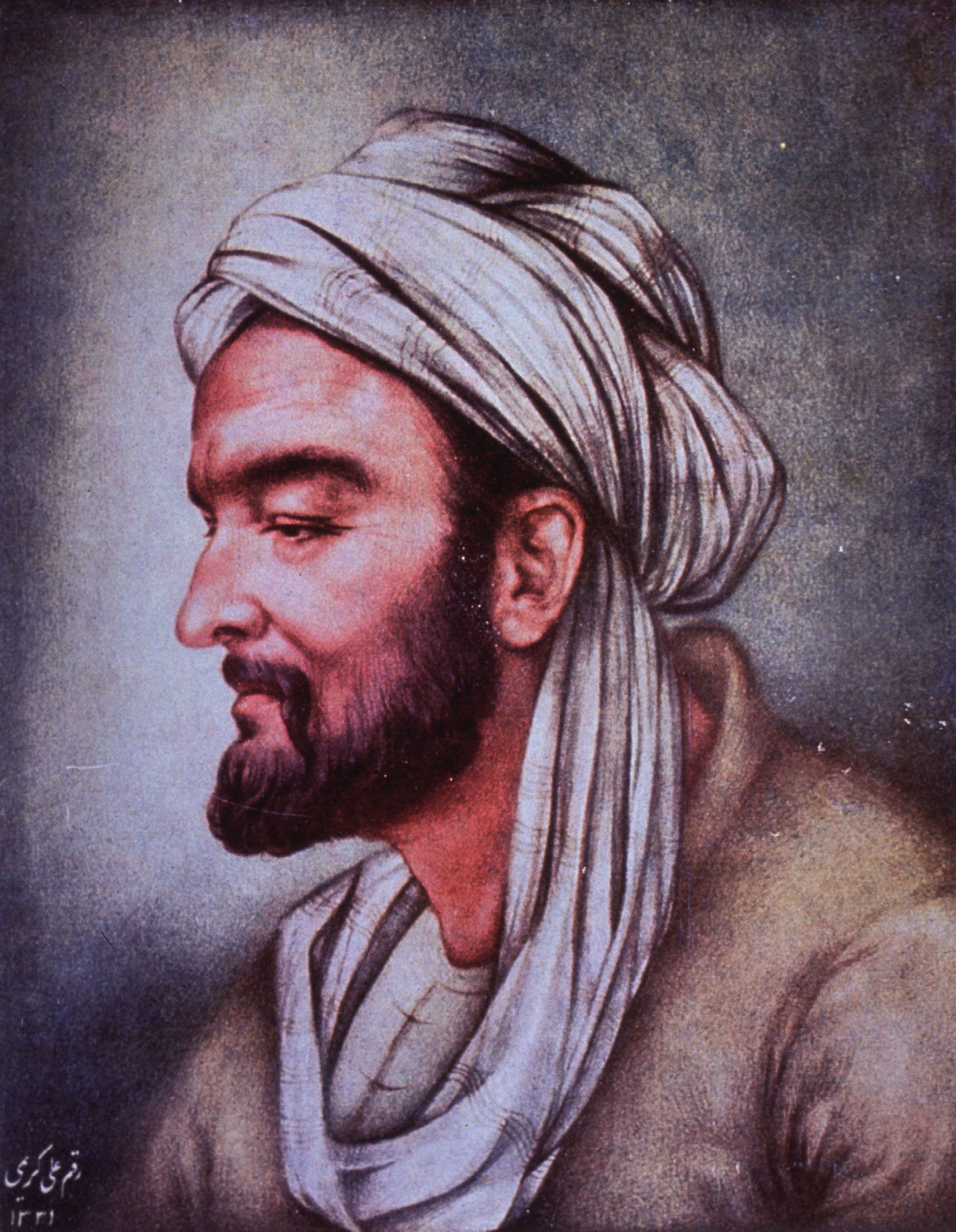
In the thriving intellectual courts of the Samanid and Buyid dynasties, where Bukhara rivaled Baghdad as a cultural capital, Abu Ali al-Husayn bin Abdallah bin al-Hasan bin Ali bin Sina navigated a world of boundless curiosity.
In the heat of a Persian summer night, sometime in the early eleventh century, a man sat deep in study, working by the flickering light of a lamp. When his mind grew sluggish, he would pour a cup of wine to revive his senses. When a logical impasse blocked his progress, he would leave his books, perform his ablutions, and walk to the local mosque to pray for illumination until the intellectual knot unraveled. If he slept, the problems pursued him into his dreams, where they frequently resolved themselves. This was Abū ʿAlī al-Ḥusayn bin ʿAbdallāh bin Sīnā—known to the Western world as Avicenna—a man whose life was an restless, brilliant storm of intellectual labor and physical indulgence. He claimed that by the age of eighteen, he had mastered all the known sciences of the Greek tradition, and that his subsequent decades of writing, wandering, and political intrigue added nothing new to his understanding, only maturity to his expression.
Avicenna’s world was the Islamic Golden Age at its easternmost peak, a landscape of shifting borders, brilliant court libraries, and sudden, violent political collapses. Born around 980 CE in the village of Afshana near Bukhara, he was the son of a Persian tax collector and Samanid government official. Bukhara was then a jewel of Central Asia, a cultural capital that rivaled Baghdad. In this environment of intense learning, Avicenna’s precocity made him a local marvel. By the age of ten, he had memorized the entire Quran. He learned basic arithmetic from an Indian greengrocer, studied Islamic jurisprudence under Hanafi scholars, and was introduced to the Greek sciences by an itinerant philosopher named al-Natili. Together they read the Isagoge of Porphyry and Aristotle’s Categories, but the young pupil soon outpaced his tutor. Avicenna set out on an independent course of study, devouring Euclid’s Elements and Ptolemy’s Almagest. Philosophy, however, presented a more stubborn barrier. He later wrote that he read Aristotle’s Metaphysics forty times until the words were permanently etched into his memory, yet its meaning remained entirely dark to him. The breakthrough came by chance at a bookstall, where he purchased a cheap commentary by the philosopher al-Farabi for a mere three dirhems. The text illuminated Aristotle’s architecture in an instant. Overjoyed, the teenager rushed home to give alms to the poor in gratitude.
At seventeen, Avicenna’s intellectual reputation secured him entry into the highest political circles. When Nuh II, the Samanid emir of Bukhara, fell dangerously ill, the young prodigy was summoned to his bedside. Avicenna’s successful treatment of the ruler earned him the ultimate reward: unrestricted access to the legendary royal library of the Samanids. It was a treasure house of rare manuscripts, organized in labeled chests by discipline. When this library was later destroyed by fire, Avicenna’s rivals whispered that he had burned it himself to prevent anyone else from accessing the sources of his immense knowledge. His comfort was brief. In 999 CE, the Samanid Empire fell to the Kara-Khanid invaders, and the sudden death of Avicenna’s father shortly thereafter cast him adrift. Thus began a lifelong odyssey across the fractured landscape of medieval Iran. He fled Bukhara for Gurganj, then moved westward through the cities of Khorasan—Nasa, Tus, and Merv—frequently traveling out of political necessity or to escape the reach of powerful rulers like Mahmud of Ghazni, whose invitations he pointedly declined.
Connected to
- religionIslam631 CE
+ 12 further connections to entries not yet ingested