Person · 1618 CE – 1707 CE · Delhi Sultanate and Mughal
Aurangzeb
- Also known as
- Abu Muzaffar Muhiuddin Muhammad Aurangzeb Alamgir
- Abul Muzaffar Muhi ud-Dîn Muhammad Aurangzeb
- Abul Muzaffar Muhi-ud-Din Mohammad Aurangzeb
- Abul Muzaffar Muhi-ud-Din Muhammad Aurangzeb
- Abul Muzaffar Muhiuddin Muhammad Aurangzeb Alamgir
- Alamgir Aurangzeb
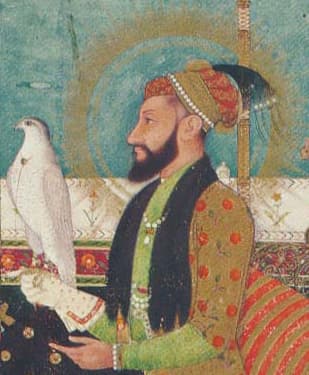
The brutal mechanics of imperial succession reached a dark zenith in the summer of 1658, when Muhi al-Din Muhammad, known to history as Aurangzeb, consolidated his grasp on the Mughal throne.
On a late May morning in 1633, a three-ton war elephant named Sudhakar stampeded through the Mughal imperial encampment. As the court scattered in panic, a fourteen-year-old prince named Aurangzeb rode directly toward the charging beast, hurling a single spear at its forehead. The elephant struck back, sweeping the prince’s horse from beneath him. Sprawled in the dust, the boy prepared to draw his sword before imperial guards intervened to lance the beast. When his father, Emperor Shah Jahan, later rebuked him for his suicidal recklessness, the young prince offered an answer that was less an apology than a manifesto: "If the fight had ended fatally for me it would not have been a matter of shame. Death drops the curtain even on emperors; it is no dishonor. The shame lay in what my brothers did." It was a stinging, public side-glance at his eldest brother, Dara Shikoh, who had stood at a safe distance during the melee. Decades before he would seize the Peacock Throne, Aurangzeb had already mapped his universe: a theater of absolute duty, where survival was merely a byproduct of resolve, and his brothers were already cast as cowards.
The rivalry between Aurangzeb and Dara Shikoh was more than a friction of sibling personalities; it was an ideological fault line running through the richest empire on earth. Dara, the eldest and his father’s chosen heir, was a philosopher-prince, a mystic who translated the Upanishads into Persian and sought a syncretic bridge between Islam and Hinduism. Aurangzeb, by contrast, was a soldier-ascetic who spent his youth in the mud and dust of the empire's frontiers, commanding armies in the high passes of Balkh and the dry hills of the Deccan. He had mastered the Quran and the hadith, practiced a rigorous personal austerity, and watched with growing alarm what he viewed as the moral laxity of the Delhi court. While Dara resided in luxury near their father, Aurangzeb was twice sent to govern the impoverished, war-torn Deccan. There, working with his administrator Murshid Quli Khan, he labored to restore prosperity by surveying agricultural lands, extending irrigation loans, and imposing the systematic zabt tax system. He grew to understand the empire from its roots up, learning how to feed armies and manage dry accounts, even as he nurtured a deep sense of grievance at being marginalized by his father’s favoritism toward Dara.
The crisis broke in September 1657 when Shah Jahan fell suddenly and catastrophically ill. Believing the emperor to be on his deathbed, Dara Shikoh seized the administration at Delhi. Across the provinces, the younger brothers mobilized. While Shuja, the governor of Bengal, marched from the east, Aurangzeb acted with cold, calculating precision. Recognizing that his own military strength was insufficient to strike alone, he initiated a correspondence with his youngest brother, Murad Baksh, the governor of Gujarat. Playing the part of a pious elder statesman with no appetite for worldly power, Aurangzeb assured Murad that his only wish was to rescue the empire from Dara’s perceived apostasy and then retire to a life of quiet devotion and pilgrimage to Mecca. Murad was entirely deceived. Their combined armies marched north, routing the imperial forces sent to stop them at the Battle of Dharmat in April 1658. Weeks later, at Samugarh, Aurangzeb’s superior tactical deployment of artillery and musketry shattered Dara’s grand army, forcing the crown prince into a humiliating flight.
Connected to
- religionIslam631 CE
- father · child ofShah Jahan1592 CE
+ 12 further connections to entries not yet ingested