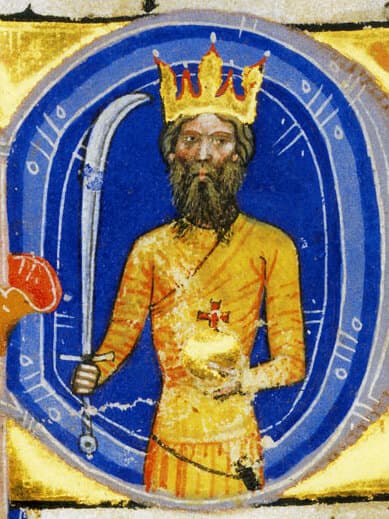
The collapse of the Hunnic Empire came swiftly in the spring of 453 CE, precipitated by the sudden death of a ruler whose very name struck terror into the hearts of two Roman capitals.
In the summer of 449, a Byzantine diplomat named Priscus sat at a banquet table in the heart of Central Europe, watching a man who held the fate of two empires in his hands. The hall was filled with Ostrogothic chieftains, Gepid kings, and Hunnic warriors, all drinking deeply from gold and silver goblets. Yet at the center of this opulence sat their ruler, Attila, using nothing but wooden cups and platters. While his guests feasted on rich delicacies, the king ate only meat, served simply and without adornment. He was a man short of stature, with a broad chest, a flat nose, and a thin, gray-sprinkled beard. He sat nearly motionless, his small, deep-set eyes rolling slowly across the room, projecting a quiet, terrifying authority that seemed to emanate from the very containment of his body. To the Romans, he was already the "scourge of all lands," a figure whose name alone could empty cities. Yet Priscus, observing him closely through the haze of wine and smoke, recorded a more complex figure: a ruler who was haughty in his public walk but restrained in action, mighty in counsel, and strangely gracious to those who submitted to his shadow.
This "little father"—the literal translation of his name from the Gothic atta—ruled an empire that was less a state than a vast, moving constellation of peoples. Emerging from east of the Volga around 370 CE, the nomadic Huns had shattered the delicate balance of the late antique world. They were pastoral warriors who lived on meat and milk, master horsemen whose mounted archery and swift javelin attacks made them seem invincible to the settled Germanic tribes of Europe. Their westward migration triggered a domino effect of human displacement: Vandals, Alans, Suebi, and Goths fled across the Rhine and the Danube, fracturing the Roman Empire into eastern and western halves. By the time Attila and his elder brother, Bleda, succeeded their uncle Ruga in 434 CE, the Huns had settled in the plains of Hungary and Transylvania, establishing a loose suzerainty over a dozen different Germanic and nomadic tribes. For a decade, the brothers ruled jointly, managing a complicated relationship with the Romans, who paid them massive subsidies in gold—nominally as payment for mercenary services, though the Huns rightly viewed it as tribute. In 445 CE, Bleda died, possibly assassinated on his brother’s orders, leaving Attila as the sole master of a domain stretching from the Rhine to the Caspian Sea.
For the next eight years, Attila played a masterful game of extortion and terror against the Mediterranean world. He understood that the true power of the barbarian lay not in the permanent occupation of Roman territory, but in the systematic exploitation of Roman fear. He crossed the Danube twice, plundering the Balkans and pushing to the very walls of Constantinople, though the city’s immense fortifications remained impregnable. Every treaty he signed with the Eastern Emperor, Theodosius II, was merely a prelude to a higher demand for gold or the surrender of political fugitives. When the Eastern court attempted to have him assassinated—bribing an interpreter named Vigilas for fifty pounds of gold—Attila’s counter-intelligence discovered the plot before it could be executed. Instead of executing the embassy, Attila used the discovery to further humiliate the Romans, sending the terrified envoys home with the gold still in their possession as a testament to their own cheap treachery. He possessed a keen sense of political theater, utilizing personal slights—such as a dispute over sacred vessels smuggled out of Sirmium by a corrupt secretary—as diplomatic leverage to keep Ravenna and Constantinople perpetually off balance.
12 links to entries not yet ingested in the Library.
The geopolitical landscape shifted dramatically in 450 CE. In Constantinople, the weak Theodosius II died and was replaced by Marcian, a battle-hardened soldier who flatly refused to pay the traditional Hunnic tribute. Sensing a stiffer resistance in the East, Attila turned his gaze to the Western Roman Empire, ruled by the trembling Valentinian III. The pretext for invasion was absurdly romantic: Honoria, the Emperor’s sister, had been placed under strict confinement following an illicit affair with a palace chamberlain. In desperation, she smuggled her signet ring to Attila, begging him to deliver her. Attila promptly interpreted the gesture as a proposal of marriage, claiming Honoria as his betrothed and demanding half of the Western Empire as her dowry. When Valentinian rejected the demand, Attila forged an alliance with the Franks and Vandals. In the spring of 451 CE, he led a massive, multi-ethnic army across the Rhine, sacking the cities of Belgic Gaul and marching deep into the imperial heartland.
The crisis forced a temporary, desperate coalition between the dying Roman administrative state and the very Germanic tribes that had spent decades dismantling it. Aëtius, the Roman Patrician of the West, formed a crucial alliance with Theodoric, the king of the Visigoths. Together, they marched north to relieve the city of Orléans, which was under siege by Attila’s forces. On June 24, 451 CE, the two massive armies collided on the Catalaunian Plains near Troyes. The Gothic historian Jordanes described the battle as "ruthless, manifold, immense, [and] obstinate." The carnage was legendary, with casualty estimates ranging wildly into the hundreds of thousands; among the fallen was King Theodoric himself. Yet the allied Romano-Gothic forces held. Attila, realizing his supply lines were vulnerable and his army bloodied, withdrew in good order back across the Rhine. It was his first major setback, a moment that proved the feared "scourge" could indeed be stopped.
Yet the retreat from Gaul was not the end of the terror. The very next spring, in 452 CE, Attila struck south into Italy. He besieged and utterly destroyed Aquileia, the grand metropolis of Venetia, driving its surviving citizens to seek refuge in the muddy, marshy lagoons of the northern Adriatic—a desperate migration that laid the literal foundations of Venice. He swept through northern Italy, burning Concordia, Altinum, and Padua, and plundering Milan. The Western Empire seemed defenseless, and Aëtius lacked the forces to mount another major campaign. It was at this juncture that a remarkable embassy met Attila on the banks of the Mincio River. Pope Leo I, leading a delegation of Roman senators, entered the barbarian camp to plead for peace. Surprisingly, Attila agreed to withdraw from Italy and return to his Pannonian home, joking that he knew how to conquer men, but the "Lion" (Leo) and the "Wolf" (Lupus, the bishop of Troyes who had previously saved his city) were too strong for him. In truth, his army was likely suffering from pestilence and food shortages, and the prospect of a prolonged siege of Rome was strategically unfeasible. He departed with a parting threat to return even more fiercely if Honoria’s dowry was not paid.
The threatened return never materialized. In early 453 CE, Attila celebrated his marriage to a young Germanic woman named Ildico. Following a night of heavy drinking and intemperate feasting, he retired to his bedchamber. The next morning, his guards entered the room to find the king dead in a pool of his own blood, having suffered a severe hemorrhage—likely a burst blood vessel—while lying on his back. His young bride was found weeping beside him. It was an anti-climactic end for a man who had terrified the Mediterranean world for two decades: the conqueror of empires choked to death on his own blood in a drunken stupor.
Following his death, the immense Hunnic Empire disintegrated with astonishing speed. Lacking the institutional bureaucracy of Rome, the Hunnic hegemony relied entirely on Attila’s personal charisma and his ability to distribute plunder. Almost immediately, Ardaric, the king of the Gepids and a former close adviser to Attila, led a massive Germanic rebellion against Hunnic rule. The subject tribes broke away, and the Huns, fractured by internal succession struggles among Attila’s sons, dissolved back into the step lands from which they had emerged. Though his empire vanished, Attila’s ghost lingered in the European consciousness. He transformed into Etzel of the German Nibelungenlied and Atli of the Scandinavian sagas—mythic figures of terrible majesty, preserved in the oral poetry of the very peoples he had once ruled. To the classical world, he represented the ultimate boundary of civilization: the final, catastrophic wave of the Migration Period that shattered the Western Roman Empire and cleared the ground for the medieval world.