Event · Age of Sail and Empire
Atlantic slave trade
- Also known as
- atlanti rabszolga-kereskedelem
- atlanti-óceáni rabszolga-kereskedelem
- Atlantic Slave Trade
- Atlantic slavery trade
- Atlantik köle ticareti
- Atlantik sliev chried
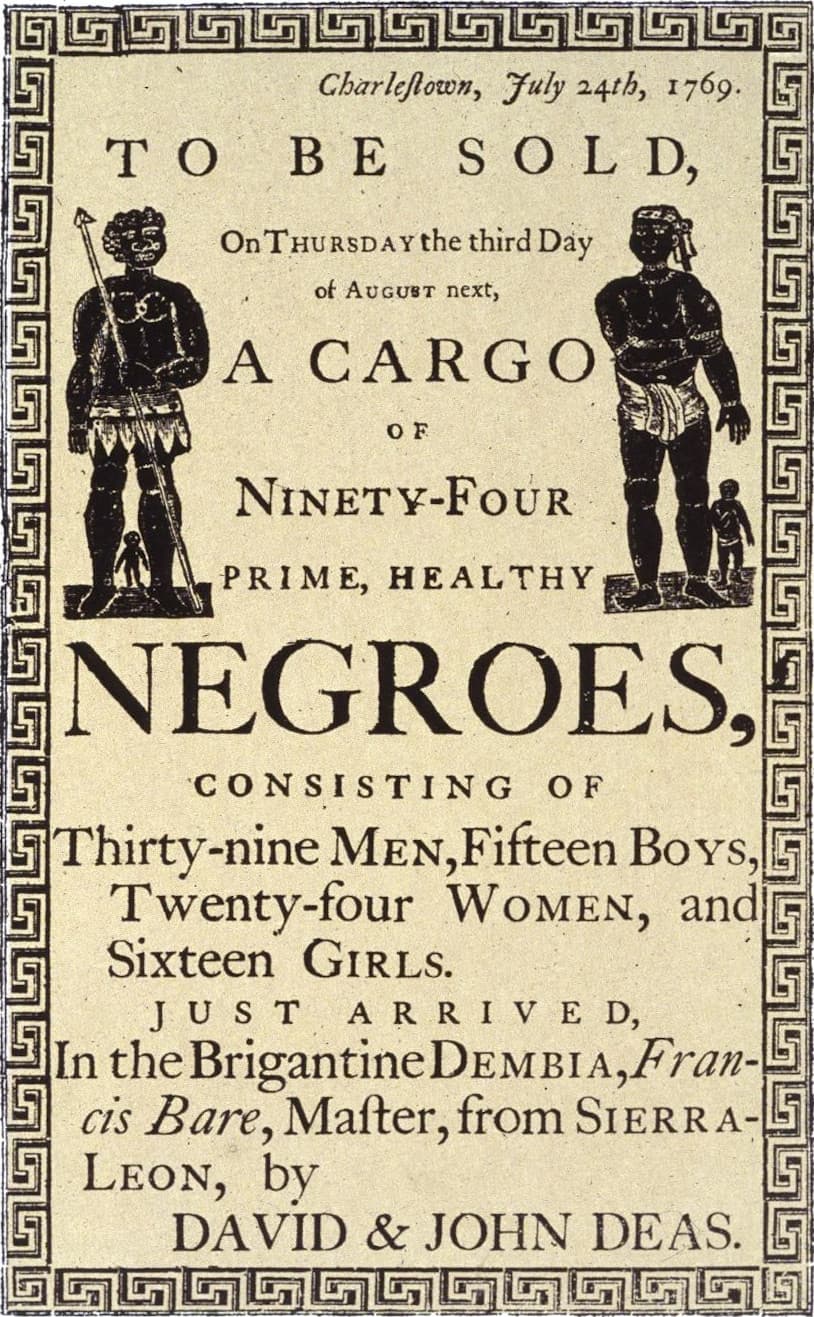
For four centuries, the Atlantic Ocean served as the conveyor belt for one of history’s most devastating commercial enterprises, transforming human beings into mere units of cargo.
In 1441, a Portuguese caravel slipped down the Atlantic coast of Africa, carrying a crew equipped with new maritime technologies and a mandate for exploration. Off the shores of what is now Mauritania, the sailors landed, seized a small group of West Africans, and sailed home to present their captives as cargo. Within a decade, the Portuguese had established a permanent trading fort at the Bay of Arguin. This small, predatory venture began a process that the French historian Pierre Chaunu termed "disenclavement"—the abrupt, violent shattering of isolation between societies that had lived for millennia on opposite sides of an untraveled ocean. For centuries, the fierce, complex tidal currents of the Atlantic had acted as a barrier, making ocean travel too hazardous for ancient and medieval ships. But the fifteenth-century development of the caravel, a vessel designed to master these currents, transformed the ocean from an impassable wall into a highway. What began as scattered coastal raids quickly evolved into a highly organized, four-hundred-year commercial apparatus that reshaped the demography, economy, and social order of four continents.
Before the first African was carried across the Atlantic, the legal and theological architecture of perpetual bondage was already being drafted in Europe. Slavery was not a new invention; it had existed in the Iberian Peninsula since the Roman Empire, and throughout the Middle Ages, both Christian and Muslim kingdoms enslaved captives of war. Historically, religion—not race—had been the defining boundary of who could be enslaved. Christians did not enslave fellow Christians, and Muslims did not enslave fellow Muslims, but both actively enslaved those they deemed heretics, pagans, or infidels. When the fall of Christian trade networks in the Balkans and the Black Sea cut off Iberia’s traditional supply of Slavic and Eastern European slaves, Spain and Portugal looked southward. They initially purchased enslaved people from Arab traders via the trans-Saharan routes, but soon realized they could bypass these intermediaries by sailing directly to the West African coast. To legitimize this traffic, the Iberian monarchs turned to the Church. In 1452, Pope Nicholas V issued the papal bull Dum Diversas, granting the King of Portugal the right to consign all non-Christians and "pagans" to perpetual slavery. This was reinforced in 1454 by Romanus Pontifex, which justified the seizure of non-Christian lands, and in 1493 by Pope Alexander VI’s Inter Caetera, which effectively divided the non-Christian world between Spain and Portugal. Simultaneously, Spain’s obsessive preoccupation with limpieza de sangre ("cleanliness of blood")—originally designed to discriminate against Jewish and Muslim converts—began to merge with theological justifications for empire. In the Americas, this legal and religious framework hardened into a rigid, racialized caste system.
The true engine of the Atlantic slave trade, however, was the insatiable demand for labor in the Americas. Following the landing of Christopher Columbus, the Spanish and Portuguese crowns laid claim to vast territories, initiating the Columbian Exchange—a massive, unprecedented transfer of plants, animals, and goods between the hemispheres. As European empires competed for dominance, they realized that the vast tracts of land in Brazil, the Caribbean, and North America could be transformed into immense engines of wealth through the cultivation of highly lucrative commodities: sugarcane, coffee, tobacco, cocoa, cotton, and rice, alongside the extraction of gold and silver. The indigenous populations of the Americas, devastated by warfare and unfamiliar Eurasian diseases, could not provide the labor force required to sustain these capital-intensive plantation economies. European colonial powers turned decisively to Africa. In 1526, a Portuguese vessel completed the first transatlantic slave voyage, carrying enslaved Africans to Brazil. Over the next three centuries, Great Britain, Spain, France, the Netherlands, the United States, and Denmark joined the trade. What began as a desperate search for labor quickly became a highly sophisticated, multi-national commercial enterprise where human beings were classified strictly as units of merchandise, to be transported as cheaply and rapidly as possible.
The logistics of this trade relied on a fragile, tense collaboration between European merchants and African elites. While early Portuguese explorers had attempted direct coastal raids, they quickly abandoned the practice as costly, ineffective, and highly dangerous. Sub-Saharan Africa was home to endemic malaria, a disease to which Europeans had no immunity; during the height of the trade, the life expectancy for a European sailor or factor residing in West and Central Africa was less than a single year. Consequently, European traders rarely ventured inland. Instead, they anchored their ships off the coast or established fortified trading posts, known as "factories," managed by a resident agent called a factor. Here, European merchants traded manufactured goods, firearms, textiles, and alcohol to local African and African-European dealers in exchange for captives. The vast majority of the men, women, and children sold into the trade were captured in inland wars, raids, and political conflicts between African states, and were then marched under guard for weeks or months to the coast. Imprisoned in the dark, stone dungeons of coastal forts like those at Elmina or Gorée Island, they awaited the arrival of the slave ships.
The voyage that followed, known as the Middle Passage, remains one of the most notorious transoceanic horrors in human history. Shipowners crammed hundreds of enslaved people into the dark, stifling, and unsanitary holds of caravels and specialized merchant vessels, treating their human cargo with a cold, mathematical calculation of space and survival. Current estimates suggest that between 12 million and 12.8 million Africans were loaded onto ships bound for the Americas over the four-hundred-year span of the trade. Of these, between 1.2 million and 2.4 million died during the grueling voyage across the Atlantic, their bodies cast into the sea. For those who survived the crossing, the ordeal did not end at the port. Millions more perished in the brutal "seasoning camps" of the Caribbean, where they were subjected to disease, malnutrition, and systematic torture designed to break their spirits before they were sold at markets alongside livestock and dry goods. In the English colonies of North America, the legal status of Africans was initially ambiguous, with some early arrivals classified as indentured servants similar to poor European contract laborers. However, by the mid-seventeenth century, colonial laws systematically hardened this fluid arrangement into a permanent, hereditary racial caste. Under the legal doctrine of partus sequitur ventrem, children born to enslaved mothers inherited their mother's status, ensuring a self-reproducing labor force that legally defined human beings as chattel property.
The Atlantic slave trade did not merely supply labor; it fundamentally reordered the world. In West and Central Africa, the drain of millions of young, productive individuals disrupted local economies, fueled protracted wars, and altered political structures for generations. In the Americas, the labor of enslaved Africans cleared forests, built cities, mined precious metals, and cultivated the massive agricultural surpluses that funded the rise of Western European empires. By the early nineteenth century, moral pressure, changing economic structures, and fear of slave rebellions led various Western governments to pass laws banning the international trade, though illicit smuggling of enslaved people continued until the last recorded voyages in the early 1870s. The trade left behind a profoundly altered global landscape: a thoroughly integrated Atlantic economy, deep-seated racial hierarchies that persisted long after emancipation, and a vast African diaspora whose culture, music, language, and lineage became permanently woven into the fabric of the Americas.
Connected to
4 links to entries not yet ingested in the Library.