Event · 2025 BCE – 609 BCE · Mesopotamian Civilizations
Assyrian Empire
- Also known as
- an Aisiria
- Ashur
- Asiaria
- Asira imperio
- Asiria
- Asiria
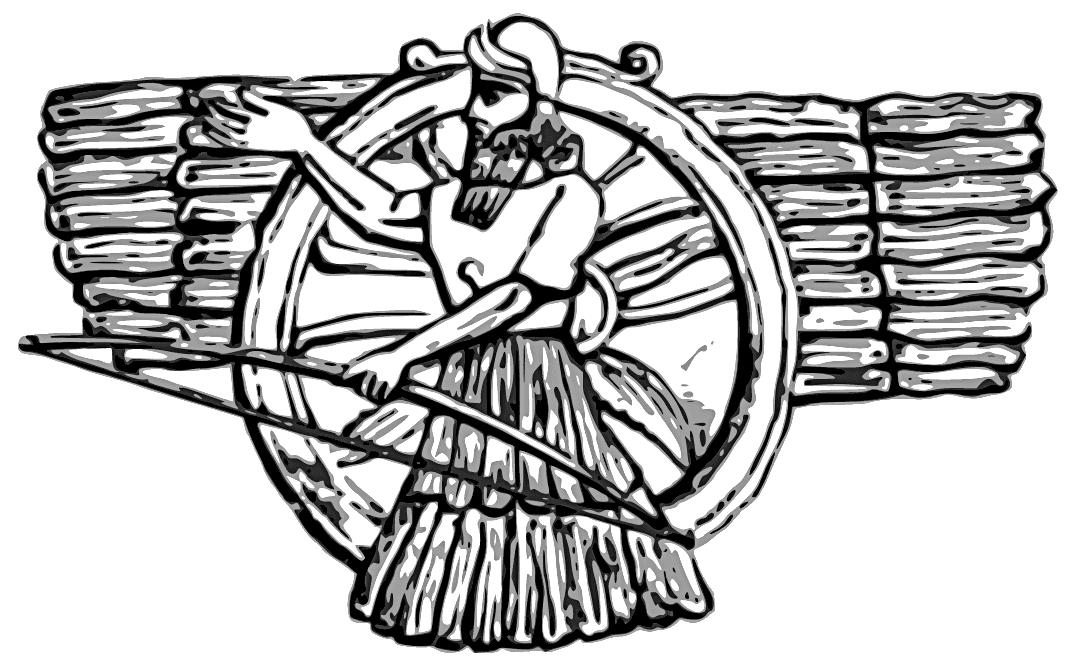
Long before it became the largest empire the world had yet seen, Assyria was a single city-state named Assur, clinging to independence in the 21st century BCE following the collapse of the Third Dynasty of Ur.
Before it was an empire, before its name became synonymous with the iron-disciplined armies that would redraw the map of the ancient Near East, Assyria was simply a city. Perched on the rocky bluffs of the northern Tigris River, this settlement—known as Assur—originated in the third millennium BCE under the shadow of larger, more dominant southern Mesopotamian powers. For centuries, it was a vassal to others: first to the Sumerian city of Kish, then to the Akkadian Empire, and later to the Third Dynasty of Ur. When that southern dynasty collapsed around 2025 BCE, the city-state of Assur slipped into a fragile independence under a native ruler named Puzur-Ashur I. At this early stage, the state was known not as a vast realm, but as ālu Aššur—the "city of Ashur." Its god, Ashur, was not yet the grand cosmic monarch of a militarized state, but a deified personification of the very crag of earth upon which the city was built. In those early centuries, the rulers of Assur did not even dare to call themselves kings. In deference to their god, whom they regarded as the city’s true sovereign, they styled themselves merely as išši'ak—the governor.
This modest city-state of fewer than ten thousand souls possessed no grand military institutions and exerted no political gravity over its neighbors. Instead, its early survival depended on a radical economic experiment. Under Erishum I, who ruled in the twentieth century BCE, Assur pioneered the earliest known experiment in free trade, transferring the initiative for large-scale foreign transactions from the state directly into the hands of private citizens. This policy transformed the modest Tigris settlement into a bustling commercial hub. Assyrian merchants established a sophisticated, long-distance trade network that reached deep into Anatolia. The legacy of this enterprise survives in some twenty-two thousand clay tablets unearthed at the merchant colony of Kültepe in modern-day Turkey—records of investments, textiles, tin, and family business disputes. Yet, as conflict intensified across the Near East, trade routes withered, and the small mercantile city-state found itself repeatedly overrun by larger neighbors, falling under the control of Amorite conquerors, Eshnunna, Elam, and the Old Babylonian Empire.
The turning point that set Assyria on its path to becoming a regional titan was forged by external crises and geopolitical collapses. In approximately 1595 BCE, a Hittite invasion shattered the Old Babylonian Empire, leaving a power vacuum in Mesopotamia. Though Assur was subsequently subjugated by the Mitanni kingdom for roughly seventy years, another Hittite invasion in the fourteenth century BCE crippled Mitanni. Seizing the moment of imperial vulnerability, a native Assyrian ruler named Ashur-uballit I threw off the foreign yoke and established the Middle Assyrian Empire. It was during his fourteenth-century BCE reign that official documents shifted their terminology from to —the "land of Ashur"—marking the transition from a solitary city-state to a territorial power. Ashur-uballit I was the first native ruler to claim the royal title of (king), boldly declaring himself a "great king" on equal standing with the Egyptian pharaohs and the Hittite monarchs.
Connected to
- had as citizenAshurbanipal685 BCE
+ 4 further connections to entries not yet ingested