Place · Indian Ocean Trade
Anuradhapura
- Also known as
- Anuphapura
- Anuradhapur
- Anuradhapura (provinshuvudstad i Sri Lanka)
- Anurádhapuraja
- Anurâdhapura
- Anurādhapura
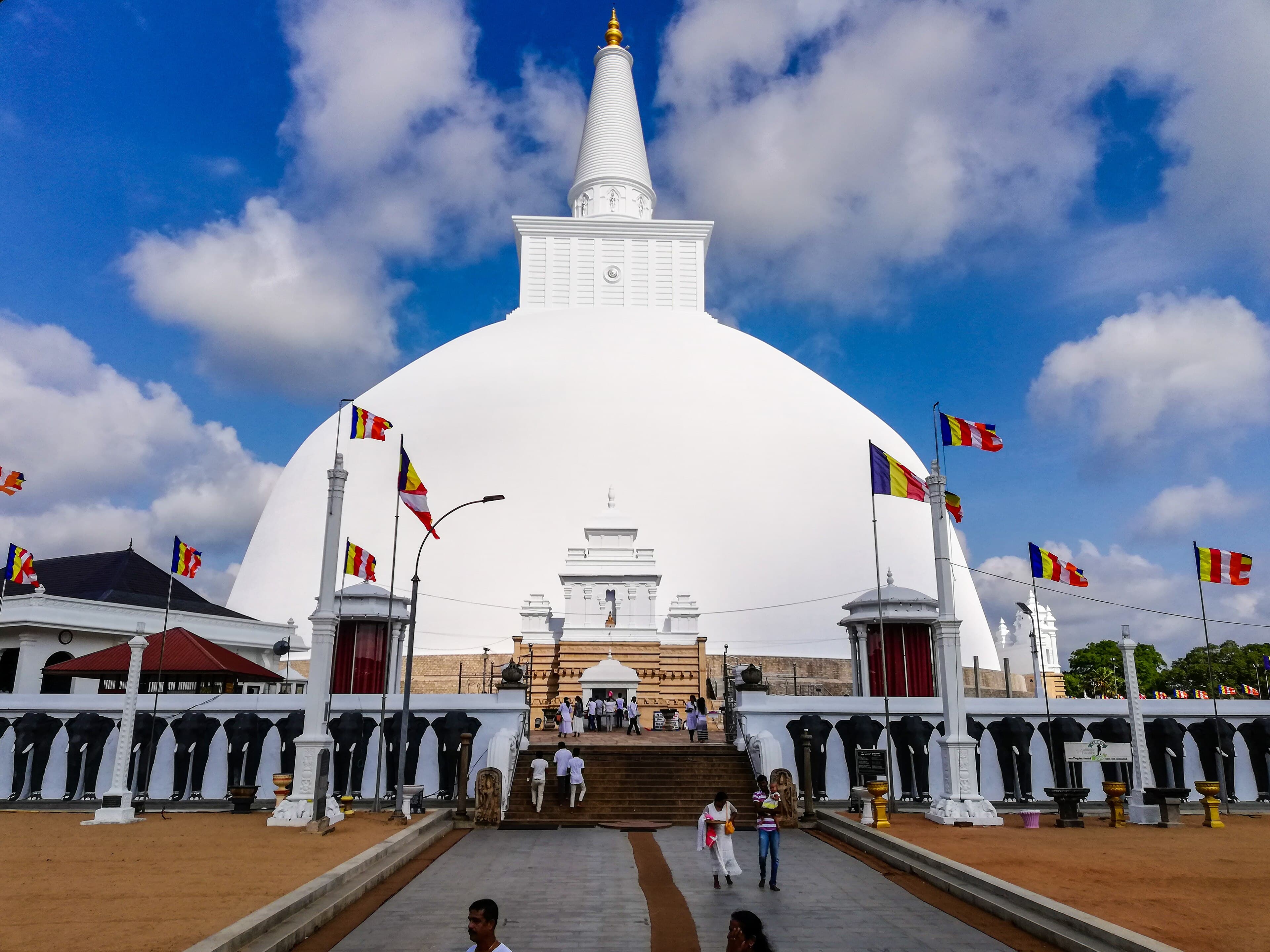
Deep in the north central plain of Sri Lanka, along the banks of the historic Malwathu Oya, lies a vast network of ancient temples and monasteries spanning over one hundred square kilometres.
In the tenth century BCE, long before the chroniclers of the Great Chronicle, the Mahāvaṃsa, began to commit the triumphs of kings to palm leaves, a settlement was already breathing along the banks of the Malwathu Oya. The archaeological record shows that this was a community of the early Iron Age—a people who worked metal, rode horses, kept domestic cattle, and cultivated paddy in the fertile, irrigable soils of Sri Lanka’s north-central plain. Surrounded by a dense, protective belt of jungle and situated strategically between the island’s northwest and northeast ports, the settlement swelled. By the seventh century BCE, it covered at least fifty hectares, its inhabitants using Plain Grey Ware pottery that pointed to trading connections stretching deep into Northern India. When King Pandukabhaya formally established his capital here in 377 BCE, naming it Anuradhapura, he was not creating a city from nothing, but rather giving a monumental political shape to a place that had already served as a vital human hearth for centuries. Under his planning, the city acquired formal gates, designated quarters for merchants, and a grid that eventually spanned a square kilometre—making it one of the largest and most sophisticated urban centres on the Asian continent during the classical era.
What emerged over the next millennium was the cradle of the hydraulic Sinhalese civilization, an extraordinary urban ecosystem sustained by a vast, intricate network of artificial reservoirs, or "tanks." To support a population that grew to immense proportions—at its height, the city’s scale invited comparisons to the colossal dimensions of Nineveh and Babylon—the kings of Rajarata mastered the flow of water. They constructed massive earthen dams and stone-lined bathing and drinking pools, known as pokunas, which were scattered throughout the urban landscape. This mastery of water was not merely utilitarian; it was the lifeblood of a grand partnership between the state and the Buddhist sangha. When the Indian prince-monk Mahinda introduced Theravada Buddhism to the island in the third century BCE during the reign of Devanampiya Tissa, the religion became inextricably linked with the crown. The royal family and the nobility patronized massive monasteries, commissioning intricate works of art and donating vast resources to the temples. In return, the monastic communities legitimized the king's rule. This symbiotic relationship transformed Anuradhapura into a legendary intellectual and spiritual capital. It attracted revered philosophers such as Buddhaghosa and became the stage for monumental acts of devotion, including a grand redaction of the Theravada Buddhist canon under King Dhatusena in the fifth century CE.
The architectural expression of this spiritual devotion was monumental, dominated by the —huge, bell-shaped masses of solid brick masonry that punctured the tropical canopy. Some of these stupas measured over eleven hundred feet in circumference, containing enough brickwork to construct a town for twenty-five thousand people. Alongside these giant domes lay vast monastic complexes like the Anuradhapura Maha Viharaya and the famous Brazen Palace, erected by King Dutugemunu (Datagamana) around 164 BCE. Yet the most sacred heart of this vast network of temples, which eventually covered over one hundred square kilometres, was not made of brick or stone. It was, and remains, the Jaya Sri Maha Bodhi. Planted in the third century BCE, this sacred fig tree was grown from a sapling of the original Bodhi tree under which Gautama Buddha attained enlightenment in Bodh Gaya, India. Today, it stands as the oldest still-living, documented, planted tree in the world, having been tended continuously by an unbroken line of guardians through every convulsion of the island’s history.
Connected to
5 links to entries not yet ingested in the Library.